






In recent years, Berberine has been hailed as a ‘wonder supplement’, with some researchers even positing it as the ‘natural Ozempic’. However, like any supplement, there are some who suggest that Berberine could be bad for your gut. Is this true? Could Berberine benefit you? That’s what the Supplement Needs team has investigated in this article…
The TL;DR
We appreciate that you may just want a quick answer to this question - and don’t necessarily want to wade through all the science.
So, here’s the ‘too long; didn’t read’ on Berberine on gut health:
-
Berberine is more often a help than a harm to the gut when used intelligently.
-
Berberine has been shown to improve blood sugar control, reduce gut inflammation, and correct bacterial overgrowth (e.g. Small Intestinal Bacterial Overgrowth (SIBO)).
-
If you do suffer side effects, they are likely to be limited to mild nausea, cramping, looser stools, or constipation.
-
The key to successful Berberine supplementation is to use a plan, taking it at appropriate times of day, with a meal.
Those are the key points regarding Berberine and gut health; however, if you really want to understand the underlying mechanisms of Berberine, its potential benefits, and how it may interact with your gut, keep reading for the complete Supplement Needs deep dive below.
What is Berberine?
For those of you who may be new to Berberine, let’s kick things off with a definition.
What, exactly, is Berberine?
Well, the scientific definition is as follows: “Berberine is a quaternary ammonium salt from the protoBerberine group of benzylisoquinoline alkaloids”. 1
We appreciate that’s a rather technical explanation. So, let’s break this down in a simpler fashion.
Berberine is a naturally occurring isoquinoline alkaloid found in the roots, bark and stems of several traditional medicinal plants. Examples of these plants, include2:
-
Hydrastis canadensis (Goldenseal).
-
Coptis Chinensis (Coptis or Goldenthread).
-
Berberis aquifolium (Oregon grape).
-
Berberis vulgaris (Barberry).
-
Berberis aristata (Tree turmeric).
In fact, these plants have been used for centuries to treat a variety of maladies such as diarrhoea, infections, and other digestive complaints3. Some studies suggest the use of Berberine stretches back as much as 3,000 years!4
It’s got a long history of use, then.
But, what about today?
With advances in our understanding of Berberine and its underlying chemistry, modern Berberine takes different forms.
Why? Because, studies5 have found that oral Berberine has poor systematic bioavailability. This is due to low intestinal absorption, active efflux by P-glycoprotein (P-gp) and extensive first-pass metabolism in the gut and liver. In other words, only a small amount of an oral dose of Berberine will ever actually be utilised by the body.
With that discovery, supplement manufacturers have devised a form of Berberine that allows for maximal bodily absorption.
What is the modern form of Berberine in supplements?
If you take a look at a quality Berberine supplement, you are likely to find that it contains a particular form of Berberine - Berberine Hydrochloride (HCI).
Berberine Hydrochloride is a standardised extract of Berberine that is routinely used in clinical trials.
It is manufactured by extracting raw Berberine using solvent-based extraction from a Berberine-rich plant. Once the Berberine has been extracted, it is filtered to end up with a crude alkaloid mixture.
Hydrochloric acid (HCI) is then carefully added to the alkaloid mixture. This results in the positively charged Berberine ions binding with the chloride ions - with the resulting Berberine Hydrochloride precipitating as a yellow crystalline solid6.
Your end product is a form of Berberine that is much easier for your body to absorb. That’s because the chloride salt within this form of Berberine dissolves in water much better than the free alkaloid alone. As a result, it reaches higher concentrations in your gut, with more of the dose being available for absorption7.
Tip: always look for Berberine supplements that use Berberine Hydrochloride (sometimes listed as Berberine HCI). For example, Supplement Needs Berberine HCI contains 485mg of Berberine HCI per 1 capsule serving.
What does Berberine do?
With the nickname ‘natural Ozempic’, one would expect Berberine to have some sort of metabolic effect. And, the evidence suggests this to be the case.
The potential mechanisms of action of Berberine in relation to weight loss include:
-
Glucose regulation: animal studies and clinical tests have shown that Berberine has a clear role in lowering blood glucose levels and improving related metabolic disorders8.
-
Lipid metabolism: Berberine has been shown to improve blood lipid metabolism. In other words, it may reduce the levels of fat cells in your blood - which is important for reducing cholesterol9.
-
Cardiovascular benefits: Berberine has been demonstrated in studies10 to improve heart contractility (how well the heart can contract), and to mitigate damage under ischemic conditions.
-
Weight loss: perhaps the most touted potential benefit of Berberine is in regard to weight loss. Studies11 have shown that Berberine may support weight loss by increasing brown adipose tissue (BAT).
It’s clear then, that Berberine may have some great potential benefits for your health. But, as you may have heard online, there are questions around how Berberine interacts with your gut.
Berberine and your gut: the mechanisms of action
In this next section, we’ll look at the specific mechanisms of action of Berberine in relation to the gut.
AMPK activation
The first mechanism of action of Berberine in relation to the gut is AMPK activation. Studies suggest that Berberine activates AMP-activated protein kinase (AMPK) - a conserved energy sensor that shifts cells from energy storage to energy utilisation.
This, in turn, increases insulin signalling, promotes GLUT-mediated glucose uptake, suppresses hepatic glucogenesis and down-regulates lipogenesis, producing measurable reductions in fasting blood glucose and blood lipids in clinical studies12.
Plain English explanation: what does the above mean in simple terms? Basically, when Berberine activates AMPK it results in lower blood sugar levels and improved blood fat levels. These are both positives for your health!
Antimicrobial properties
Berberine also exhibits broad antimicrobial properties in relation to the gut.
These antibacterial mechanisms of action include13:
-
Increasing bacterial cell membrane permeability.
-
Binding/intercalating with nucleic acids and inhibiting replication/transcription.
-
Interfering with enzymes essential for bacterial survival (e.g. topoisomerases).
These mechanisms all help Berberine undermine a wide range of pathogens, which underpins Berberine’s historical use in treating diarrhoea, and clearing small-intestinal bacterial overgrowth.
Plain English explanation: Berberine attacks germs in the gut in a few different ways, all at once.
Immunomodulation and anti-inflammatory signalling
Berberine has also been linked to direct anti-inflammatory effects within the gut. The scientific literature suggests it does this by inhibiting key signalling pathways (notably NF-kB and MAPK) and reducing pro-inflammatory cytokines such as TNF-ɑ, IL-6, and IL-1β14.
Animal models have also found that Berberine decreases inflammatory cell infiltration, lowers oxidative stress markers and promotes mucosal healing. These effects are mechanistically important because chronic low-grade gut inflammation can perpetuate dysbiosis (an imbalance in the microbial communities in your gut) and barrier dysfunction15.
By dampening inflammatory signalling, Berberine helps break that cycle and allows mucosal repair.
Plain English explanation: Berberine can reduce inflammation in your gut, providing your gut (and gut lining) with a chance to heal.
Microbiome modulation
Finally, Berberine has been demonstrated to reshape gut microbial composition and function - in a beneficial fashion.
Berberine has been shown to increase beneficial taxa (that is, related microbes), whilst reducing certain pathobionts (microorganisms that can cause disease and/or inflammation).
These compositional changes to the gut microbiome can also sometimes be accompanied by other changes such as increased short-chain fatty acid production, and altered bile-acid deconjugation16.
Plain English explanation: Berberine can tweak your gut’s microbiome, causing bacteria to produce helpful chemicals that tell your body to burn energy more efficiently and calm inflammation.
Is Berberine ‘bad’ for your gut?
It’s clear then, that Berberine has many potential benefits for your gut health - ranging from AMPK activation, antimicrobial properties, anti-inflammatory potential, and even microbiome modulation.
So, why do some people claim that Berberine can be ‘bad’ for your gut?
Adverse gut effects
Whilst Berberine is generally well tolerated, some people find that it can cause an adverse reaction in their gut.
Clinical trials have found that Berberine can - in some people - cause mild nausea, abdominal cramping, bloating, loose stools, or constipation17. Other trials have suggested that Berberine can lead to changes in gut bacteria, which in turn leads to diarrhea18. However, such changes tend to be transient and improve over time as the gut adjusts to regular doses of Berberine.
Tip: if you do suffer adverse GI symptoms when taking Berberine, start on a low dose and scale up over time. Further, ensure that you take our Berberine with a meal, as this helps reduce intestinal irritation.
Microbiome disruption
A more significant side-effect of taking Berberine can be changes to your gut’s microbial community (and by extension the development of dysbiosis).
Research19 has found that in most people, Berberine results in positive changes to the microbiome, resulting in improved metabolic markers. However, in a smaller cohort of people, such changes can be accompanied by short-term imbalances (for example, increased stool water or transient diarrhea).
This is why some people claim that Berberine is ‘bad’ for the gut - but it is by no means a universal symptom.
The question you’re probably asking at this point is, “am I at risk of microbiome disruption if I supplement Berberine?”
The answer depends on whether you fall into one of the following categories20:
-
You have low baseline microbial diversity.
-
You have recently been on a course of repeated antibiotics.
-
You have a weakened immune system.
If you fall into one of these three categories, then you may be at risk of Berberine-induced dysbiosis. We emphasise may here, as it’s by no means guaranteed that you’ll experience an adverse gut reaction to Berberine - after all, everyone is different!
Tip: consider ‘cycling’ Berberine (e.g. by having regular short breaks from use), rather than continuous, indefinite dosing - this may reduce long-term microbiome disruption and limit unknown chronic risks.21
Drug interactions
Another way in which Berberine can potentially be ‘bad’ for your gut, is in relation to drug interactions.
There are two routes by which Berberine can interact with prescription medications; via drug metabolising enzymes (CYPs), and drug transporters (notably P-glycoprotein, P-gp)22.
Particular interactions to be aware of include:
-
Statins: Berberine may inhibit CYP3A4 and P-gp, which can raise blood levels of statins that use those pathways, increasing the risk of statin-related side effects23.
-
Anti-diabetic drugs: Berberine can have an adverse interaction with certain anti-diabetic drugs (e.g. metformin, insulin) due to its glucose-lowering effects. Indeed, certain studies24 have indicated that Berberine can reduce blood glucose when combined with metformin, which can increase the risk of hypoglycemia.
-
Anticoagulants: Berberine can also have a potentially negative interaction with anticoagulants such as warfarin. This is speculated to be due to Berberine’s interaction with CYP pathways25.
These are the predominant factors that result in Berberine being perceived as being ‘bad’ for the gut - but, as you can see, these are very much ‘localised’ drawbacks that are very much dependent on individual physiology.
What is the best way to supplement Berberine?
If you’re keen to add Berberine to your supplementation regime - and given its potential benefits, who wouldn’t?! - there are a number of things you can do to ensure the experience is as optimal as possible.
We’ve outlined our top Berberine supplementation tips below:
Take Berberine with meals
Taking Berberine around mealtimes both reduces the chance of stomach upset, and targets post-meal glucose spikes. A win, win, if you will!
Don’t just take our word for it, though. Clinical evidence26 finds that Berberine is best absorbed by the body (with minimal gastrointestinal distress), when consumed alongside a meal.
This is because food will both buffer and dilute the Berberine, so it is less likely to irritate the gut lining27.
Take Berberine with a high-carbohydrate meal
So, it’s important to take Berberine alongside a meal. However, if you really want to get the most out of your Berberine supplement (and avoid any potentially adverse effects), it’s recommended that you take it with a high-carbohydrate meal.
This is because high-carbohydrate meals can slow gastric emptying and lower peak local concentrations of the Berberine. In other words, this results in Berberine leaving the stomach and reaching the gut more slowly, which reduces sudden, high-local concentrations that can trigger loose stools or cramping28.
Choose the bioavailable form of Berberine
As we mentioned earlier in this article, Berberine in its ‘natural state’ has poor oral bioavailability. So, if you want to add Berberine to your diet in an efficacious way, then ensure you choose the most bioavailable form - in this case Berberine Hydrochloride (HCI).
Supplement Needs Berberine HCI contains 485mg of Berberine HCI per 1 capsule dose via Berberine aristate extract to provide a maximally bioavailable, and premium, form of Berberine.
How to ‘stack’ Berberine
If you’re serious about adding Berberine to your diet and yielding many of its potential benefits, then you’ll be pleased to know that it ‘stacks’ particularly well with a number of other supplements.
Below, we’ve set out the Supplement Needs products against which Berberine can be stacked to provide the ultimate in gut health and metabolic support.
Supplement Needs Gut Guard+

Gut Guard+ is a purpose-built, multi-herb formula that already includes Berberine plus a suite of antimicrobial, anti-inflammatory, and gut-soothing botanicals. These additional ingredients provide broad-spectrum support, reducing cramping, bloating, and helping to control ‘bad’ bacteria that Berberine alone may not be able to target29.
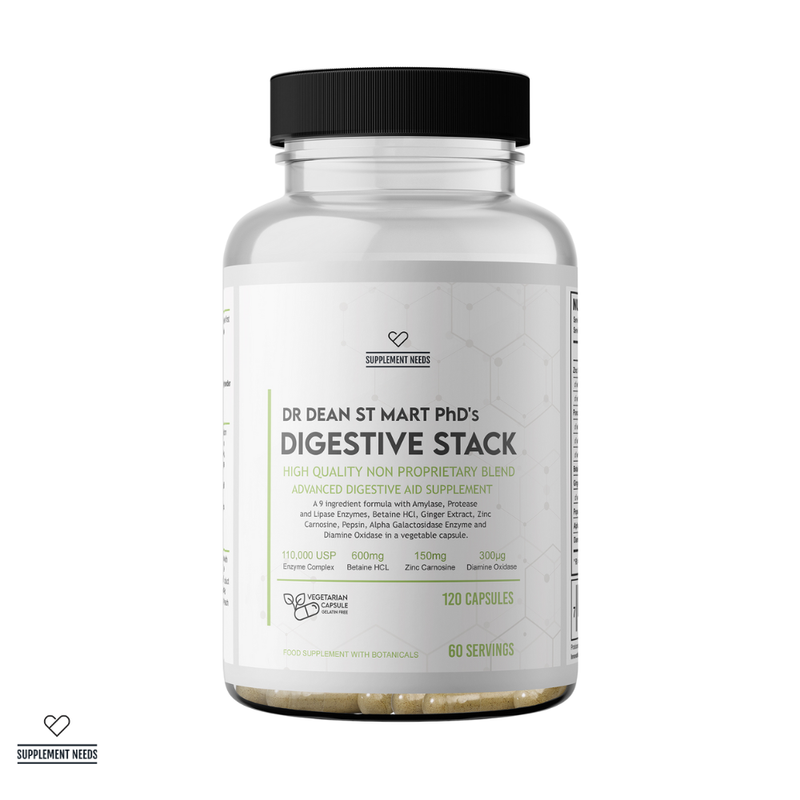
Supplement Needs Digestive Stack

Digestive Stack has been formulated to contain enzymes and gut-soothing botanicals that reduce post-meal bloating, cramping, and gas - the exact short-term symptoms people sometimes get when starting Berberine.
So, taking Berberine and Digestive Stack together can improve comfort. In particular, Digestive Stack’s herbal antispasmodics (e.g. ginger) can soothe the cramps and nausea that sometimes accompany Berberine supplementation30.
Supplement Needs Probiotics

Whilst Berberine can knock down pathogenic microbes within the gut, you need something to rebuild the beneficial bacteria afterwards. That something is Supplement Needs Probiotics.
As a multi-strain, high-CFU supplement, Supplement Needs Probiotics can reseed the helpful taxa that produce short-chain fatty acids, and other beneficial compounds - exactly the functions that support gut barrier health and a healthy metabolism.
What’s more, studies have found that Berberine and probiotic supplements combined can produce greater improvements in some lipid measures and other metabolic markers than Berberine alone31.
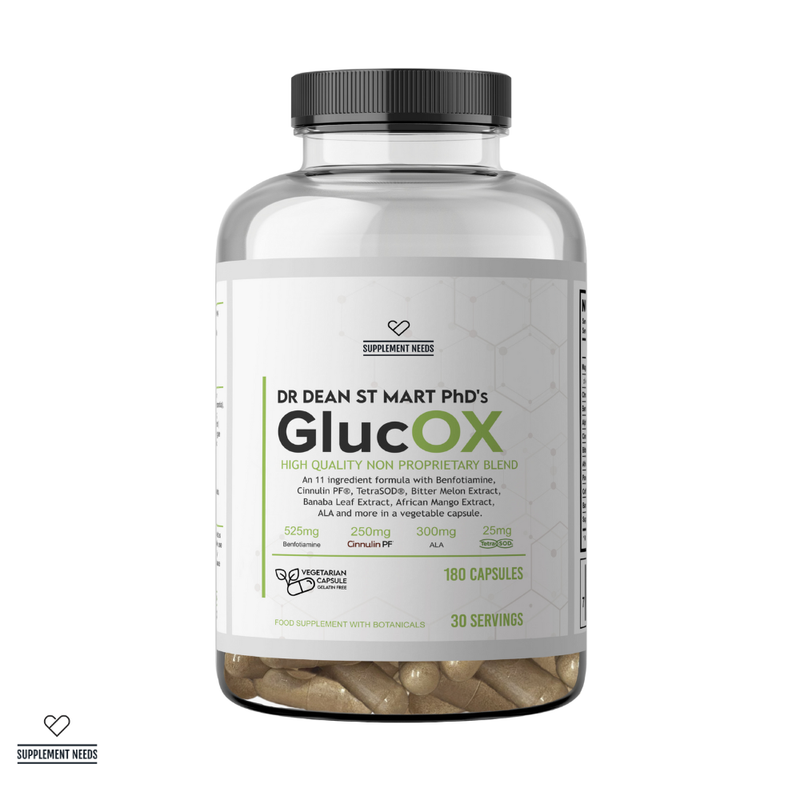
Supplement Needs GlucOX

If you’re looking for a supplement that will pair well with Berberine, then consider Supplement Needs GlucOX.
Glucox has been designed as a complementary metabolic support formula that fills the gaps that Berberine doesn’t fully address. Whilst Berberine improves insulin signaling and alters gut microbes, GlucOX supplies additional insulin-sensitising nutrients and antioxidant cofactors (so the two together address multiple routes that influence blood sugar and metabolic resistance).
GlucOX brings together clinically studied ingredients such as alpha-lipoic acid (ALA) - which supports insulin sensitivity and acts as an antioxidant - plus cinnamon extract (CinnulinPF®) and banaba (corosolic acid) which have been shown to help lower post-meal glucose. It also includes bitter melon - which has glucose-lowering properties, and chromium, which supports glucose metabolism.
Choose gut health support, choose Supplement Needs

Thinking about supporting your gut health? Then start with Supplement Needs. Here’s why people like you choose and trust Supplement Needs:
-
🔎 Complete ingredient transparency: every supplement lists exactly what’s inside. No hidden extras. We disclose the provenance of each ingredient and the part of the plant used (e.g. root, leaf, bark), so you know exactly what you’re putting in your body.
-
🌿 High-quality, research-led ingredients: we don’t use generic raw ingredients when better, clinically-supported forms exist. Whenever possible, we select proprietary, evidence-based ingredients for our products.
-
🎓 Formulated by experts: our products are researched and developed under the guidance of Dr. Dean St. Mart PhD, whose academic background and expertise make him a supplement industry leader.
-
🏭 UK manufacturing to rigorous standards: all products are produced in the UK to Good Manufacturing Practice (GMP) and ISO benchmarks for safety, potency, and consistency.
If you want carefully-engineered digestion support supplements made from traceable, high-quality ingredients, Supplement Needs is your first and last destination.
Shop digestion support supplements now
For more insights and information about supplements, explore the Supplement Needs blog…
What Is the Microbiome? The Importance of Gut Health | What Are the Best Supplements for Improving Gut Health & Digestion? | What Type of Protein Powder Is Best for People Who Are Lactose Intolerant?
Disclaimer
The information on this website should not be used as a substitute for professional medical advice or care. If you have questions about your health, please contact your doctor.
References:
1. Chemical Entities of Biological Interest (ChEBI) Online, 2021, ‘CHEBI:16118 - Berberine’. Available at: https://www.ebi.ac.uk/chebi/CHEBI:16118 (Accessed on 25th January 2026).
2. National Library of Medicine: National Centre for Biotechnology Information. LiverTox: Clinical and Research Information on Drug-Induced Liver Injury [online]. Available at: https://www.ncbi.nlm.nih.gov/books/NBK564659/ (Accessed on 1st February 2026).
3. Neag M, Mocan A, Echeverría J, et. al. Berberine: Botanical Occurrence, Traditional Uses, Extraction Methods, and Relevance in Cardiovascular, Metabolic, Hepatic, and Renal Disorders [online]. Available at: https://pmc.ncbi.nlm.nih.gov/articles/PMC6111450/ (Accessed on 25th January 2026).
4. Birdsall T, Kelly G. Berberine: therapeutic potential of an alkaloid found in several medicinal plants [online]. Available at: https://www.cabidigitallibrary.org/doi/full/10.5555/19980302413 (Accessed on 25th January 2026).
5. Ai X, Yu P, Peng L, et. al. Berberine: A Review of its Pharmacokinetics Properties and Therapeutic Potentials in Diverse Vascular Diseases [online]. Available at: https://pmc.ncbi.nlm.nih.gov/articles/PMC8964367/ (Accessed on 25th January 2026).
6. Huang S, Huang G. A comprehensive review of recent advances in the extraction and therapeutic potential of berberine [online]. Available at: https://pmc.ncbi.nlm.nih.gov/articles/PMC12257298/ (Accessed on 25th January 2026).
7. Battu S, Repka M, Maddineni S, et. al. Physicochemical Characterization of Berberine Chloride: A Perspective in the Development of a Solution Dosage Form for Oral Delivery [online]. Available at: https://pmc.ncbi.nlm.nih.gov/articles/PMC2974104/ (Accessed on 25th January 2026).
8. Li M, Dang Y, Li Q, et. al. Berberine alleviates hyperglycemia by targeting hepatic glucokinase in diabetic db/db mice [online]. Available at: https://pmc.ncbi.nlm.nih.gov/articles/PMC6541623/ (Accessed on 25th January 2026).
9. Blais J, Huang X, Zhao J. Overall and Sex-Specific Effect of Berberine for the Treatment of Dyslipidemia in Adults: A Systematic Review and Meta-Analysis of Randomised Placebo-Controlled Trials [online]. Available at: https://pubmed.ncbi.nlm.nih.gov/36941490/ (Accessed on 25th January 2026).
10. Neag M, Mocan A, Echeverría J, et. al. Berberine: Botanical Occurrence, Traditional Uses, Extraction Methods, and Relevance in Cardiovascular, Metabolic, Hepatic, and Renal Disorders [online]. Available at: https://pmc.ncbi.nlm.nih.gov/articles/PMC6111450/ (Accessed on 25th January 2026).
11. Ilyas Z, Perna S, Al-thawadi S, et. al. The effect of Berberine on weight loss in order to prevent obesity: A systematic review [online]. Available at: https://www.sciencedirect.com/science/article/pii/S0753332220303292 (Accessed on 25th January 2026).
12. Wang Q, Zhang M, Liang B, et. al. Activation of AMP-Activated Protein Kinase Is Required for Berberine-Induced Reduction of Atherosclerosis in Mice: The Role of Uncoupling Protein 2 [online]. Available at: https://pmc.ncbi.nlm.nih.gov/articles/PMC3181327/ (Accessed on 25th January 2026).
13. Zhang X, Sun X, Wu J, et. al. Berberine Damages the Cell Surface of Methicillin-Resistant Staphylococcus aureus [online]. Available at: https://www.frontiersin.org/journals/microbiology/articles/10.3389/fmicb.2020.00621/full (Accessed on 25th January 2026).
14. Dong Y, Fan H, Zhang Z, et. al. Berberine ameliorates DSS-induced intestinal mucosal barrier dysfunction through microbiota-dependence and Wnt/β-catenin pathway [online]. Available at: https://europepmc.org/article/pmc/8898376 (Accessed on 25th January 2026).
15. Xiao Y, Li X, Fang Y, et. al. Berberine suppresses colon inflammation via integrated modulation of host metabolism, microbial ecology, and innate immune signaling [online]. Available at: https://pmc.ncbi.nlm.nih.gov/articles/PMC12680593/ (Accessed on 25th January 2026).
16. Tian Y, Cai J, Gui W, et. al. Berberine Directly Affects the Gut Microbiota to Promote Intestinal Farnesoid X Receptor Activation [online]. Available at: https://pmc.ncbi.nlm.nih.gov/articles/PMC6323626/ (Accessed on 25th January 2026).
17. Li Z, Wang Y, Xu Q, et. al. Berberine and health outcomes: An umbrella review [online]. Available at: https://pubmed.ncbi.nlm.nih.gov/36999891/ (Accessed on 26th January 2026).
18. Yue S, Liu J, Wang W, et. al. Berberine treatment-emergent mild diarrhea associated with gut microbiota dysbiosis [online]. Available at: https://www.sciencedirect.com/science/article/pii/S0753332219310716 (Accessed on 26th January 2026).
19. Yang F, Gao R, Luo X, et. al. Berberine influences multiple diseases by modifying gut microbiota [online]. Available at: https://pmc.ncbi.nlm.nih.gov/articles/PMC10435753/ (Accessed on 26th January 2026).
20. Yue S, Liu J, Wang W, et. al. Berberine treatment-emergent mild diarrhea associated with gut microbiota dysbiosis [online]. Available at: https://www.sciencedirect.com/science/article/pii/S0753332219310716 (Accessed on 26th January 2026).
21. Dehau T, Cherlet M, Croubels S, et. al. Berberine-microbiota interplay: orchestrating gut health through modulation of the gut microbiota and metabolic transformation into bioactive metabolites [online]. Available at: https://pmc.ncbi.nlm.nih.gov/articles/PMC10733463/ (Accessed on 1st February 2026).
22. Wu F, Cui M, Wang S, et. al. Effect of berberine on pharmacokinetics and pharmacodynamics of atorvastatin in hyperlipidemia rats [online]. Available at: https://pubmed.ncbi.nlm.nih.gov/38054840/ (Accessed on 26th January 2026).
23. Wu F, Cui M, Wang S, et. al. Effect of berberine on pharmacokinetics and pharmacodynamics of atorvastatin in hyperlipidemia rats [online]. Available at: https://pubmed.ncbi.nlm.nih.gov/38054840/ (Accessed on 26th January 2026).
24. Wang H, Zhu C, Ying Y, et. al. Metformin and berberine, two versatile drugs in treatment of common metabolic diseases [online]. Available at: https://pmc.ncbi.nlm.nih.gov/articles/PMC5839379/ (Accessed on 26th January 2026).
25. Li Z, Wang Y, Xu Q, et. al. Berberine and health outcomes: An umbrella review [online]. Available at: https://pubmed.ncbi.nlm.nih.gov/36999891/ (Accessed on 26th January 2026).
26. Yin J, Xing H, Ye J. Efficacy of Berberine in Patients with Type 2 Diabetes [online]. Available at: https://pmc.ncbi.nlm.nih.gov/articles/PMC2410097/ (Accessed on 26th January 2026).
27. ibid.
28. Alqahtani M, Kazi M, Alsenaidy M, et. al. Advances in Oral Drug Delivery [online]. Available at: https://pmc.ncbi.nlm.nih.gov/articles/PMC7933596/ (Accessed on 27th January 2026).
29. Singh J, Saxena E, Chaudhary A, et. al. Immunomodulatory properties of Giloy (Tinospora cordiolia) leaves and its applications in value-added products [online]. Available at: https://pmc.ncbi.nlm.nih.gov/articles/PMC11699423/ (Accessed on 27th January 2026).
30. Alammar N, Wang L, Saberi B, et. al. The impact of peppermint oil on the irritable bowel syndrome: a meta-analysis of the pooled clinical data [online]. Available at: https://pubmed.ncbi.nlm.nih.gov/30654773/ (Accessed on 27th January 2026).
31. Wang S, Ren H, Zhong H, et. al. Combined berberine and probiotic treatment as an effective regimen for improving postprandial hyperlipidemia in type 2 diabetes patients: a double blinded placebo controlled randomised study [online]. Available at: https://pmc.ncbi.nlm.nih.gov/articles/PMC8726654/ (Accessed on 27th January 2026).