





If you’ve been interested in the world of supplementation for long enough, you’ll have encountered the term ‘clean supplements’ - supplements that are free from excipients, fillers and agents. The idea is, these ingredients are somehow ‘harmful’ or impede the mechanism of action of the supplement. The reality, though, is that this is a myth. Keep reading to find out why…
The rise of ‘clean’ supplements
Where did the concept of clean supplements come from? And, how did they become a distinct ‘marketing movement’ within the UK supplement industry?
Like the ‘clean label’ movement, the clean supplements trend appears to have arisen as consumers have demanded more transparency on ingredients and formulations.
And, this is to be welcomed! Here at Supplement Needs we are 100% transparent about how our products are formulated, and we provide a complete list of ingredients (including, where possible, the provenance of those ingredients).
However, some supplement brands have taken this trend a step further - and have sought to position fillers, anti-caking agents, binders, and similar excipients as unnecessary extras.
To take this to its logical conclusion, some of these brands insist that supplements should consist solely of active vitamins or minerals and nothing more.
However, as we’ll explain later in this article, this is a misguided view point - and one that can actually diminish the quality of supplements.
Ultimately, this simplistic narrative that underpins the clean supplements trend ignores important points about the science of formulation, manufacturing realities, and regulatory frameworks.
To put it bluntly, the clean supplements movement oversimplifies what is a complex reality.

What are excipients, fillers and agents?
Let’s begin with defining exactly what excipients, fillers, and agents actually are. And, why have they become the subject of so many apocryphal tales?

Well, let’s take a typical example - a high-quality multivitamin supplement.
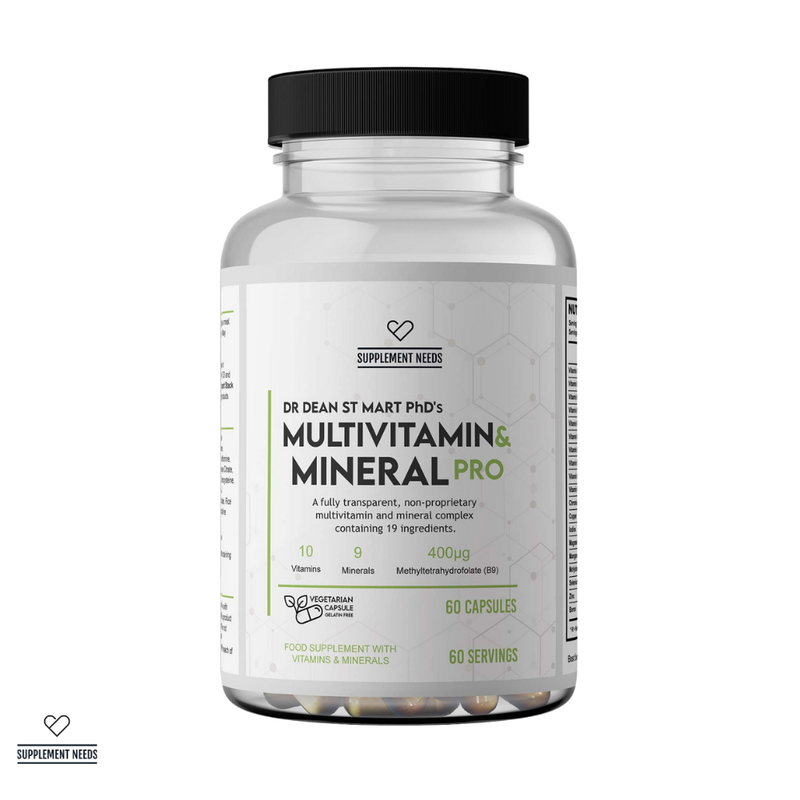
Look at the label and you’ll see a list of ingredients. In this case, the ingredients include Vitamin E, Zinc Mono-L-Methionine, Biotin, amongst many others. These are the active ingredients that have a mechanism of action upon the body.
However, if you look at the ingredient list closely, you’ll see a number of non-active ingredients:
-
Rice flour.
-
Microcrystalline cellulose.
-
Vegetable cellulose capsule.
Of these, rice flour acts as the bulking agent, adding volume to support those ingredients that are present only in very small amounts. The microcrystalline cellulose acts as a binding and anti-caking agent, providing stability of the supplement. Finally, the vegetable cellulose capsule acts as the delivery vehicle (e.g. the ‘shell’ of the supplement).
So, our definition of excipients, fillers, and agents is:
Ingredients added to supplements that are formulated alongside active ingredients to aid in manufacturing, stabilisation, and delivery of the active ingredients into the body.
The European Medicines Agency defines excipients as follows1:
‘An excipient is a constituent of a medicine other than the active substance, added in the formulation for a specific purpose. While most excipients are considered inactive, some can have a known action or effect in certain circumstances’.
What are the different types of excipient?
Whilst we’ve so far talked about excipients, fillers, and agents, there are actually several different types commonly used in dietary supplements. We’ve set these out below.
Fillers (bulking agents)
Fillers (also known as bulking agents) are an essential ingredient in supplements where the active ingredients are present in only trace amounts (e.g. micrograms).
For example, active ingredients such as Biotin or Chromium are typically formulated in such small amounts, that it would be impossible to fill a capsule with these ingredients alone. Instead, they need to be ‘suspended’ within a medium such as a bulking agent.
Thus, many supplements utilising bulking agents like rice flour. These types of ingredients are considered to be approved ‘carriers’ or ‘bulking agents’ by regulatory bodies such as the UK’s Food Standards Agency (FSA)2.
Binders
These are non-active ingredients that, as the name suggests, help to hold the ingredients within a supplement together. Binders are typically used in solid supplements such as tablets, as they prevent cracking, disintegration, and physical instability.
The International Journal of Pharmaceutical Sciences Review3 states that without binders, tablets would “lack adequate mechanical strength” and become unusable.
So, again, we see that ‘clean’ supplements overlook the realities of producing reliable, quality products.
Flow and anti-caking agents
Many active ingredients are produced in such a way to take a ‘powdered’ form. This powder can then be delivered within a cellulose capsule.
However, many of these powdered active ingredients can be prone to ‘caking’. Caking refers to the scenario in which a powdered ingredient forms into clumps, lumps, or hardened masses. This results in the powder losing its free-flowing character, being harder to be consumed. Caking typically occurs due to physiochemical changes within - such as moisture absorption, temperature fluctuations, or compression4.
It’s the job of flow and anti-caking agents to stop this from occurring within a supplement.
Examples of flow and anti-caking agents include Silicon Dioxide and Magnesium Stearate, which are commonly found in supplements. They are also agents that have regulatory approval; the European Food Safety Agency (EFSA) has confirmed that silicon dioxide is safe for use as an anti-caking agent and resists moisture-induced clumping.
Note: not only do anti-caking agents help maintain the integrity of supplements, they also ensure they can pass smoothly through high-speed manufacturing equipment. This ultimately results in a higher-quality end product.
Disintegrants
Serving the opposite purpose of anti-caking agents, disintegrants ensure that tablets break apart correctly once ingested.
If you’re a regular reader of the Supplement Needs blog, then you’ll know that it’s factors like this - active ingredients being able to readily break down endogenously - that are key to bioavailability (i.e. your body being able to actually make use of the active ingredients within a supplement).
Disintegrants can fall into two categories: those that promote water uptake, and those that induce tablet rupturing. Examples of disintegrants include starch, alginates, and methyl cellulose5.
Coatings and capsules
Even if you’ve only a passing awareness of supplements, you’ll know that the majority of them take the form of capsules - those clear little containers that embrace the powdered ingredients within.
Well, these capsules are themselves excipients - being non-active ingredients that help deliver the active ingredients into your body.
Capsules are typically made from materials such as bovine or porcine gelatin, or - in the case of vegetarian/vegan friendly capsules - made from hydroxypropyl methylcellulose, a cellulose-derived polymer.
Preservatives, acids and stabilising agents
Depending on the supplement in question, you may find that it also contains preservatives, acids, and/or stabilising agents. These are ingredients such as Citric Acid or tocopherols that are used to prevent the supplement from spoiling and ‘going off’.
Such ingredients can play a number of roles. These include maintaining pH balance, protecting lipids from oxidation, or to preserve potency.
Key takeaway: excipients are not fillers for the sake of cost-cutting as many clean supplement brands claim, but instead play an important functional role in the efficacy of supplements.

Why do supplements use excipients?
We appreciate that we’ve already lightly covered why most supplements use excipients of one form or another. In this next section, we’ll take a deep-dive into the many reasons that supplement manufacturers choose to include these non-active ingredients into their products6.
Dosage consistency
One of the most critical - and overlooked! - roles of excipients is to guarantee the uniform distribution and dosage of the active ingredients in a supplement.
Why? Because, many essential vitamins and minerals are dosed in such small amounts that even slight inconsistencies can lead to huge variations in potency - something which you definitely want to avoid!
This assertion is backed up by scientific research which has found that ‘excipients such as diluents and flow agents are essential to achieve ‘content uniformity’ and prevent dose variability7.
As some industry experts have described it, without excipients, supplements would be playing ‘nutrient roulette’ - with capsules varying in dosage from one to the next.
Some so-called ‘clean supplement’ brands make a big deal out of the fact they use Nu-Mag as an excipient. However, this particular excipient makes high throughput impossible - adding additional manufacturing run time costs to the consumer.
Excipients help to ensure dose consistency by:
-
Reducing friction between particles - ensuring active ingredients flow smoothly through machinery and thus are dosed correctly.
-
Improving blend uniformity - ensuring that finer particles don’t rise to the top, and heavier particle to the bottom - again, benefiting dose uniformity.
-
By ensuring ‘dilution blending’ - where the excipient evenly spreads the active ingredients throughout the supplement.
Examples of these excipients include:
-
Silicon Dioxide (SiO₂).
-
Magnesium Stearate.
-
Calcium Silicate.
Key takeaway: excipients prevent dose inconsistency, and help ensure that what you swallow actually matches the label!
Making tablets possible!
This sounds like a strange point, but without excipients, tablets would be physically impossible.
Contrary to what some ‘clean’ supplement brands will tell you, it’s not possible to simply compress active ingredients (e.g. vitamins and minerals) into a tablet form. The reality, is that most active ingredients lack the properties needed to form a stable, manufactured tablet.
Enter excipients…
Excipients are there to bind together the active ingredients that wouldn’t otherwise be able to agglomerate into a cohesive product. There are a number of reasons why this is the case89:
-
Many active ingredients are hygroscopic - meaning they absorb moisture from the air and effectively become a sticky mass.
-
Some active ingredient powders are too fine or electrostatically charged to flow into capsule dies without the assistance of excipients.
-
Other active ingredients have poor compressibility - meaning they just won’t form tablets without the inclusion of binders.
In short, if excipients such as binders were not used in supplements (especially tablets), you’d find that they crumble, jam machinery, and generally not result in a stable or usable product for you the consumer.
Shelf life
Another important role played by excipients is the fact that they provide stabilising functions that protect a supplement’s active ingredients from degradation.
Many vitamins - including ubiquitous ones like B vitamins, Vitamin C, and Vitamin A - are sensitive to environmental factors like humidity, heat, light, and oxygen.
Excipients, thus, are used to help supplements:
-
Prevent moisture absorption.
-
Protect sensitive active ingredients from oxidation.
-
Reduce interactions between reactive ingredients.
-
Maintain a free-flowing powder blend.
-
Ensure that tablets break down at the correct time, not prematurely.
Examples of excipients that are used to maintain the shelf life of supplements include silica, which helps prevent moisture absorption. Other excipients, like plant-based gums, protect against light and oxidation.
Key takeaway: without stabilising excipients, your favourite supplements would degrade more rapidly, lose potency, or physically spoil.
Enhancing bioavailability
As we’ve written about previously, bioavailability is an important factor in how effective supplements are. In short, the more ‘bioavailable’ a supplement is, the more able your body is to absorb it and make use of those all important vitamins and minerals.
However, in another example of ‘clean supplements’ brands overlooking science, excipients can arguably assist with bioavailability.
Different classes of excipients can assist with bioavailability in the following ways:
-
Disintegrants: these types of excipients (such as Sodium Starch Glycolate etc) help tablets break apart quickly in the gastrointestinal tract so that nutrients become available for absorption10.
-
Modified-release matrices: also known as modified-release dosages, MR matrices ensure the slow, steady release of an active substance in the gastrointestinal tract. This ensures consistent levels of the active ingredient are maintained within the bloodstream, allowing for less frequent dosing (e.g. once, daily), and reducing side effects that can come from peaks and troughs in drug/active ingredient concentration11. Examples of modified-release matrices include hydroxypropyl methylcellulose (HPMC), which is a plant-derived cellulose polymer.
-
Solubility enhancers: certain excipients, like lipids and emulsifiers, are used to improve the solubility of fat-soluble vitamins (e.g. Vitamins A, D, E, and K). This has the ultimate effect of making these vitamins more bioavailable, thus usable by your body.
Ultimately, excipients can improve the functionality of supplements. This is an important point that is often overlooked by so-called ‘clean label’ brands.
Improving consumer experience
The reality is that your favourite supplements are likely to be your favourites precisely because they include excipients. Take the following examples:
-
Those powders that are renowned for being ‘smooth’ and easy to digest, will almost certainly make use of anti-caking agents to prevent the powder from clumping.
-
Lubricants ensure that capsule-based supplements will open and disperse efficiently when swallowed.
-
Binders and coatings ensure that tablets are easier to swallow.
-
Your favourite water/juice soluble powders will use flow aids to help them mix better in liquids.
But, don’t just take our word on this point. Consumer rights magazine Which? has investigated excipients and concluded that, “Some fillers have valid roles in supplements - they can create a time-release effect to ensure you get the best from the supplement, and preserve the nutrients so that you get what you’re paying for. In some cases, when nutrients are present in small amounts, fillers can bulk the product so that it’s a reasonable size”12.

What you need to know about the most common excipients
Even a cursory Google search will reveal myriad rumours and unsubstantiated claims about many excipients. However, the most important part of that last sentence is the word ‘unsubstantiated’ - there are many claims swirling around excipients that simply aren’t true.
The reality is that excipients used in UK and EU-produced supplements are food-grade, extensively studied, and tightly regulated. Each excipient must perform a specific functional role and cannot be added to a supplement arbitrarily.
Furthermore, a bevy of regulatory bodies exist to ensure that excipients are safe and appropriate. These regulatory bodies include; European Food Safety Authority (EFSA), European Medicines Agency (EMA), and the UK Food Standards Authority (FSA).
And, yet, the myths persist. So, the Supplement Needs team decided to investigate and find out what the science really says about common excipients.
Magnesium Stearate
A commonly-used lubrication and flow-agent, Magnesium Stearate is typically used to prevent powders from sticking to machinery, improving flow during encapsulation, and to ensure consistent fill weights.
Myth: it is often claimed on the Internet that Magnesium Stearate blocks nutrient absorption, can ‘coat’ the gut, or even suppress immune response.
Reality: this is completely untrue, with multiple studies1314 debunking these spurious claims.
Silicon Dioxide
Another excipient that comes in for a degree of unjustified criticism online is Silicon Dioxide. An anti-caking and flow agent, Silicon Dioxide is often used to prevent the degradation of many vitamins, minerals and herbal compounds that are hygroscopic in nature.
Myth: perhaps one of the most absurd claims about this excipient is the ‘Silica is glass’ fallacy.
Reality: food-grade Silicon Dioxide is amorphous, not crystalline. In fact, the EFSA conducted a study that concluded that Silicon Dioxide is safe for use as an excipient15. Furthermore, Silica is a trace mineral that is an important dietary requirement!
Microcrystalline Cellulose
A common binder, filler, and anti-caking agent, Microcrystalline Cellulose is used to bulk formulations that contain small quantities of active ingredients. It is also used to maintain tablet structure, ensure the uniform distribution of ingredients within capsules, and improve powder flow (amongst other things).
Myth: you’ll sometimes see Microcrystalline Cellulose described as ‘sawdust’ online.
Reality: naturally, the description of ‘sawdust’ couldn’t be farther from the truth. Microcrystalline Cellulose is a purified, pharmaceutical-grade cellulose with consistent particle size, safety data, and strict purity requirements. Multiple studies have also demonstrated its safety as an excipient16.
Rice Flour
Used as a filler and bulking agent, Rice Flour helps to ensure capsules can be properly filled when the active ingredients (e.g. trace minerals) are dosed at microgram or low-milligram levels.
Myth: some brands insist that using Rice Flour is somehow ‘more natural’.
Reality: Rice Flour performs the same function as other pharmaceutical fillers and isn’t ‘more natural’ than alternative excipients. Instead, it is merely the same sort of finely-milled, food-grade rice flour commonly found in everyday products - including baby rice and infant foods.
Maltodextrin
Acting as a stabiliser, carrier, and processing aid within supplements, Maltodextrin is used to provide structural support to natural extracts, prevent clumping, and improve stability. It is especially effective when used with plant extracts that degrade rapidly without a carrier.
Myth: some forums state that Maltodextrin as an excipient can lead to ‘spikes in blood sugar’.
Reality: this is false. Maltodextrin would only cause spikes in blood sugar if consumed in gram-level quantities - not the tiny milligram levels used in capsules. This is evidenced by ISO 26642:2010 Food products - Determination of the glycaemic index (GI) and recommendation for food classification17.
Gelatin/Hydroxypropyl
Gelatin and Hydroxypropyl are two excipients that are used to create supplement capsules (the physical ‘shells’ that contain the active ingredients). Such delivery mechanisms ensure dosage accuracy, protect sensitive ingredients, and enable controlled dissolution in the stomach or intestines.
Myth: gelatin capsules can be harmful, with HPMC capsules being unreliable.
Reality: both gelatin and HPMC capsules are harmless, natural, and are both approved, regulated with established safety profiles.
Excipient regulation in the UK
Believe everything you read online, and you’d think that excipients represent some sort of ‘wild west’ supplement ingredient that pose an array of harms.
In fact, here in the UK, excipients - and their use in supplements - is governed by one of the strictest regulatory frameworks in the world. As we mentioned earlier, for an excipient to be added to a supplement it must be proven to serve a genuine, functional purpose. Excipients must also meet incredibly rigorous safety and purity standards.
To put this another way, the extant regulations that apply to excipients in the UK mean that supplements:
-
Cannot be used without functional justification.
-
Cannot exceed authorised levels.
-
Cannot enter the market without toxicological approval.
-
Must meet strict purity standards.
-
Must appear clearly on ingredient labels.
-
Must be re-evaluated when new evidence emerges.
The issue with ‘clean supplement’ marketing
As we hope you’ve gathered by now, ‘clean supplement’ marketing messages are often misleading at best, downright harmful at worst.
The reality is that the ‘clean supplement’ label is little more than a marketing gimmick that doesn’t take into account the modern realities associated with supplement formulation and manufacturing.
In fact, the messaging of the clean supplement movement:
-
Misrepresents excipients as harmful.
-
Equates ‘natural’ with ‘better’.
-
Obscures manufacturing realities.
-
Sacrifices accuracy and stability for marketing slogans.
-
Diminishes consumer understanding of what makes a supplement truly high quality.
Shop with Supplement Needs today
If you want to buy supplements that have truly been led by the science in their formulation and development, then shop with Supplement Needs today.
Ready to move beyond the myth of clean supplements and enjoy the very best science-led supplements instead? Here at Supplement Needs, you’ll find supplements crafted with:
-
🔍 Transparent, fully disclosed formulas - with every ingredient listed, every dose detailed.
-
💪 Purpose-driven excipients only when needed - nothing added without scientific justification.
-
💯 Premium ingredients - selected for purity, stability, and optimal bioavailability.
-
💡Clinically-considered dosing - developed by a formulator - Dr. Dean St. Mart PhD - who prioritises long-term, future health outcomes.
Choose supplements designed for real-world performance, not marketing soundbites. Choose Supplement Needs.
Explore the complete Supplement Needs Health range now
For more insights and information about supplements, explore the Supplement Needs blog…
Could Supplements Make You More Productive? A Deep Dive Into Productivity Supplements | Busting the Biggest Supplement Myths | What Is Biohacking? How Does It Work?
Disclaimer:
The information contained on this website should not be used as a substitute for professional medical care or advice. If you have questions about your health, please contact your doctor.
References:
1. European Medicines Agency. Excipients labelling [online]. Available at: https://www.ema.europa.eu/en/human-regulatory-overview/marketing-authorisation/product-information-requirements/excipients-labelling (Accessed on 26th November 2025).
2. Food Standards Agency. Approved additives and E numbers [online]. Available at: https://www.food.gov.uk/business-guidance/approved-additives-and-e-numbers#emulsifiers-stabilisers-thickeners-and-gelling-agents (Accessed on 26th November 2025).
3. International Journal of Pharmaceutical Sciences Review. Available at: https://globalresearchonline.net/journalcontents/v49-2/14.pdf (Accessed on 26th November 2025).
4. Jenike & Johanson. What Causes Powder Caking? [online]. Available at: https://jenike.com/what-causes-powder-caking/ (Accessed on 26th November 2025).
5. Markl D, Zeitler J. A Review of Disintegration Mechanisms and Measurement Techniques [online]. Available at: https://pmc.ncbi.nlm.nih.gov/articles/PMC5382187/ (Accessed on 26th November 2025).
6. ones D. Role of Excipients in Drug Formulation: Functions, Types, and Applications [online]. Available at: https://www.pharmafocuseurope.com/articles/role-of-excipients-in-drug-formulation (Accessed on 28th November 2025).
7. Haschek and Rousseaux’s Handbook of Toxicology Pathology. Ed. Haschek W, Rousseaux C, Wallig A. Available at: https://www.sciencedirect.com/book/edited-volume/9780124157590/haschek-and-rousseauxs-handbook-of-toxicologic-pathology (Accessed on 28th November 2025).
8. Veronica N, Heng P, Liew C. Understanding the Roles of Excipients in Moisture Management in Solid Dosage Forms [online]. Available at: https://pubmed.ncbi.nlm.nih.gov/38647432/ (Accessed on 28th November 2025).
9. Maclean N, Khadra I, Mann J, et. al. Investigating the role of excipients on the physical stability of directly compressed tablets [online]. Available at: https://www.sciencedirect.com/science/article/pii/S2590156721000359 (Accessed on 28th November 2025).
10. Pharma Excipients. Disintegrants - Pharmaceutical Excipients [online]. Available at: https://www.pharmaexcipients.com/disintegrants/ (Accessed on 2nd December 2025).
11. Wikipedia. Modified-release dosage [online]. Available at: https://en.wikipedia.org/wiki/Modified-release_dosage (Accessed on 2nd December 2025).
12. Which? Do you need to worry about fillers and bulkers in supplements? [online]. Available at: https://www.which.co.uk/news/article/do-you-need-to-worry-about-fillers-and-bulkers-in-supplements-aQktf6X9jxnF (Accessed on 2nd December 2025).
13. Hobbs C, Saigo K, Koyanagi M, et. al. Magnesium stearate, a widely-used food additive, exhibits a lack of in vitro and in vivo genotoxic potential [online]. Available at: https://pmc.ncbi.nlm.nih.gov/articles/PMC5655391/ (Accessed on 2nd December 2025).
14. PureNSM Nutritional Supplement Manufacturers, INC. Is Magnesium Stearate Safe? Unpacking the Facts [online]. Available at: https://purensm.com/is-magnesium-stearate-safe-unpacking-the-facts/ (Accessed on 2nd December 2025).
15. EFSA. Re-evaluation of silicon dioxide (E551) as a food additive in foods for infants below 16 weeks of age and follow-up of its re-evaluation as a food additive for uses in foods for all population groups [online]. Available at: https://www.efsa.europa.eu/en/efsajournal/pub/8880 (Accessed on 2nd December 2025).
16. Azimonti G, Bastos M, Christensen H, et. al. Safety and efficacy of microcrystalline cellulose for all animal species [online]. Available at: https://pmc.ncbi.nlm.nih.gov/articles/PMC7393347/ (Accessed on 2nd December 2025).
17. ISO. ISO 2664:2010 Food products - Determination of the glycaemic index (GI) and recommendation for food classification [online]. Available at: https://www.iso.org/standard/43633.html (Accessed on 5th December 2025).