








If you’re dealing with stiff, aching joints - or you want to protect your future health - there’s one compound you need to know about: Chondroitin. But, how exactly does it work? And, what can it do for your body and health? Well, keep reading and you’ll learn everything you need to know about Chondroitin in this Supplement Needs guide…
What is Chondroitin?
We appreciate that for many people the word Chondroitin is effectively meaningless - or, at best, it conjures up images of old joint supplement adverts.
If you’re in this camp, then don’t worry. We’ll kick things off with a definition.
Chondroitin - often encountered in its chondroitin sulphate form - is a naturally occurring glycosaminoglycan (GAG), which means it’s a long-chain of repeating sugar molecules that carries sulphate groups and plays a structural role in the body’s connective tissues.
These chains typically consist of alternating units of N-Acetylgalactosamine and Glucuronic acid - a configuration that gives Chondroitin its ability to attract and retain water, lending cartilage its resilience and shock-absorbing capacity.
Within your body Chondroitin is most abundant in articular cartilage - the smooth, rubbery tissue that coats the ends of bones at joints such as the knees, hips, and hands. As part of larger proteoglycan complexes (molecules made of protein cores with many attached GAG chains), Chondroitin contributes to the extracellular matrix that supports cartilage structure and function1.
To put this in simpler terms, think of Chondroitin as part of the ‘molecular scaffolding’ in cartilage. Its long, negatively-charged chains bind water and help maintain the gel-like consistency of cartilage, which - in turn - allows joints to withstand repetitive loading and compressive forces without damage2.
Although Chondroitin is naturally present in the body, it is not an essential nutrient - meaning we do not require dietary intake of it to survive. However, supplemental Chondroitin is used by many people to strategically support joint health, especially individuals experiencing cartilage wear and discomfort associated with conditions such as osteoarthritis.
Where is Chondroitin found in the body?
As we’ve already mentioned, Chondroitin is primarily found within your body’s joints. Its primary role is mechanical; maintaining hydration, resilience, and structural integrity in tissues that are exposed to compressive or tensile forces.
However, we appreciate that may be a little vague, so let’s take a look at the specific areas where Chondroitin is most concentrated within the body:
-
Articular cartilage: this is where you’ll find the highest concentration of Chondroitin within the body. Articular cartilage refers to the smooth hyaline cartilage that covers the ends of your bones within synovial joints such as the knees, hips, shoulders, and hands. Within articular cartilage, Chondroitin sulphate chains are attached to core proteins, forming large proteoglycan aggregates. These aggregates bind water through their negatively charged sulphate groups, enabling this cartilage to resist compressive loading and act as a ‘shock absorber’3.
-
Intervertebral discs: Chondroitin is also present in your body’s intervertebral discs (within the spine). Healthy, sufficiently-hydrated Chondroitin, maintains disc height and mechanical resilience under spinal loading. Studies have suggested that the degeneration of these discs is linked to a reduction in Chondroitin (amongst other important compounds)4.
-
Synovial fluid: this is the fluid found in the cavities of your movable joints. Chondroitin is found in this fluid - particularly during cartilage turnover or degeneration. In fact, elevated levels of Chondroitin in synovial fluid are used as biomarkers of cartilage metabolism and breakdown5.
-
Tendons and ligaments: Chondroitin (of the Chondroitin sulphate variety) is also found in your tendons and ligaments - albeit, at lower concentrations than in cartilage. Within the connective tissues of the tendons and ligaments, Chondroitin contributes to the extracellular matrix and interacts with collagen fibres, influencing tissue hydration and tensile properties6.
Chondroitin, then, is not confined to a single joint, but is an ever-present, and all-important part of your body’s ‘joint set’ - helping to maintain optimal musculoskeletal function.
What is Chondroitin sulphate?
You’ve possibly picked up on the fact that we’ve referred to both Chondroitin and Chondroitin Sulphate so far in this article.
That’s because the supplemental form of Chondroitin is almost always Chondroitin Sulphate.
Chondroitin Sulphate is a sulphated glycosaminoglycan (GAG) composed of repeating disaccharide units of N-acetylgalactosamine and glucuronic acid. What differentiates Chondroitin Sulphate from other glycosaminoglycans is the presence and positioning of sulphate groups along its sugar backbone.
These sulphation patterns, alongside molecular weight and purity, are not just chemical technicalities - they influence biological behaviour, absorption characteristics, and product quality.
It’s for those reasons that supplements almost always use the Sulphate form of Chondroitin.
What does Chondroitin do?
We’ve already alluded to the fact that Chondroitin plays an important role in your joints and overall musculoskeletal health, however, for the real ‘health nerds’ out there, we’ve taken a deeper dive into what Chondroitin does below.
Cartilage’s ‘structural hero’
Chondroitin is your cartilage’s structural hero. Chondroitin helps to maintain the structural resilience of your cartilage through two key mechanisms:
-
Water retention and compressive resistance: cartilage acts as the shock absorber of your joints - but, it can only play this role with the aid of Chondroitin. The highly negative charge on the sulphate groups of Chondroitin attracts and holds water within the cartilage matrix. This hydration is essential as the water provides the hydraulic cushion that allows cartilage to absorb compressive forces. No Chondroitin, no water, no cushion!7
-
Interaction with collagen: cartilage’s tensile strength comes from a dense network of type II collagen fibres. Chondroitin Sulphate chains, attached to core proteins like aggrecan, interweave with collagen fibrils to stabilise matrix architecture and distribute mechanical stress8.
Interaction with biochemical pathways
Beyond providing important structural support (as outlined above), Chondroitin also underpins and interacts with a number of biochemical pathways that may influence inflammation and tissue turnover.
These biochemical pathways include:
-
Modulation of inflammatory mediators: in vitro studies suggest that Chondroitin Sulphate can reduce the expression of pro-inflammatory cytokines such as IL-1β and TNF-ɑ, both of which play central roles in cartilage degradation in osteoarthritis9.
-
Potential inhibitor of cartilage-degrading enzymes: Chondroitin has potentially been demonstrated as being able to interfere with the catabolic enzymes that lead to cartilage breakdown10.
-
Synovial fluid modulation: although hyaluronic acid is the primary glycosaminoglycan in synovial fluid, cartilage turnover releases Chondroitin Sulphate fragments into joint fluid, and supplemental Chondroitin may influence fluid properties and joint lubrication indirectly. Notably, Chondroitin sulphate levels are also used as biomarkers of cartilage metabolism11.
Chondroitin and osteoarthritis
One of the main interactions that Chondroitin has is in the realm of osteoarthritis.
If you’re not familiar with the condition, osteoarthritis is a degenerative joint condition characterised by cartilage breakdown, subchondral bone changes, inflammation and pain.
Because Chondroitin is a native component of cartilage, it has been studied extensively in relation to osteoarthritis. Such studies posit that Chondroitin has the potential to act as a ‘symptomatic slow-acting agent’ as well as a possible ‘structure-modifying’ supplement.
But, what can Chondroitin do directly in relation to osteoarthritis? Here’s what the evidence base says so far:
-
Symptom relief: meta-analyses have shown that Chondroitin Sulphate can reduce pain and improve function compared with placebo in people with osteoarthritis. For example, a Cochrane review found Chondroitin led to greater pain reduction and functional improvement than a placebo12.
-
Structure-modifying effects: some trials suggest that long-term Chondroitin supplementation may slow joint space narrowing on x-rays - a surrogate for cartilage loss - but results have been inconsistent across studies13.
In summary, then, Chondroitin plays an important structural role within your body’s cartilage, interacts with important biochemical pathways, and can play a contributory role in the alleviation of osteoarthritis symptoms.
How much Chondroitin should I take per day?
As leading supplementation experts, the team here at Supplement Needs often fields questions around dosage. And, it’s a question that we hear quite a lot in relation to Chondroitin.
So, if you want to protect your future health and maintain your musculoskeletal health - how much Chondroitin should you be taking each day?
The simple answer is to refer to the clinical trials of Chondroitin.
And, what dosage do they use? The most studied dose of Chondroitin Sulphate sits within the 800 - 1,200mg per day range.
A comprehensive Cochrane systematic review assessing Chondroitin for osteoarthritis found that most trials used daily doses within this range and reported modest improvements in pain and functional outcomes compared with placebo14.
Similarly, longer-term trials examining structural outcomes - such as joint space narrowing on x-rays - have commonly used between 800mg to 1,200mg daily.
Here at Supplement Needs, Dr. Dean St. Mart PhD has formulated our Supplement Needs Glucosamine & Chondroitin product to deliver 1,200mg of Chondroitin per day across 3 capsules.
This provides you with a dose of Chondroitin at the highest end of the clinically-studied ranges.
How long does Chondroitin take to work?
This is another common question that we receive here at SN Towers. However, the answer is very much dependent on what you want Chondroitin supplementation to do.
If you’re expecting Chondroitin to provide relief to aching joints, then it’s important to remember that it is not an acute analgesic - it does not block pain pathways in the way that NSAIDS (non-steroidal anti-inflammatory drugs) do.
Instead, you expect - like with many other supplements - for the effects of Chondroitin to be compounding, building up slowly over time with consistent dosing.
Trials suggest that noticeable symptom changes can become evident around 4 to 12 weeks of consistent supplementation. However, further studies indicate that the best effects are evident following months of consistent Chondroitin supplementation15.
When is the best time to take Chondroitin?
Yet another question that we field around Chondroitin (and lots of other supplements for that matter), is around what time Chondroitin should be taken.
Is there some magical time of day that will yield Chondroitin’s best benefits? Is there a combination of other supplements/foodstuffs that Chondroitin should be taken with?
We get all these questions and more…
So, let’s get straight to the point.
Unlike vitamins or various other compounds, Chondroitin does not produce rapid, time-dependent physiological effects (it’s not like taking a paracetamol and experiencing a reduction in pain 60 minutes later).
Instead - as we mentioned earlier - the true beneficial effects of Chondroitin only appear over a longer time period, as a compounding effect of consistent dosing.
In other words, it’s more important that you take Chondroitin every single day without fail, rather than consuming it at a particular time of day.
Should you take Chondroitin with food?
Well, should you?!
Most clinical trials of Chondroitin have seen it administered with meals. However, this appears to have been done more to improve gastrointestinal tolerance rather than to improve absorption per se.
For example, a large systematic review evaluating Chondroitin supplementation for osteoarthritis reported that it is a generally well-tolerated supplement with only mild gastrointestinal effects occurring in a small percentage of study participants16.
Perhaps the key takeaway for you here is that there is no strong evidence that food significantly impairs absorption.
So, if you want to take your Chondroitin supplement alongside a meal, go for it!
What other supplements should you take Chondrotin with?
As with many other organic compounds, Chondroitin lends itself to being taken alongside other supplements.
So, what’s the story with Chondroitin?
Glucosamine
It’s no surprise that you’ll typically see Chondroitin ‘tag teamed’ with Glucosamine. The combination of Chondroitin and Glucosamine has been extensively studied, with Glucosamine serving as a precursor substrate for glycosaminoglycan synthesis, with Chondroitin contributing structurally to cartilage hydration and matrix stability17.
In other words, these two compounds work really well together.
Collagen
Another supplement with which Chondroitin is commonly ‘stacked’ is Collagen. Hydrolysed collagen has been studied in joint health contexts. A double-blind trial in athletes reported improvements in joint pain associated with activity18.
But, the key question is - what’s the relationship between Chondroitin and Collagen? It’s seems to come down to a structural issue:
-
Collagen provides structural amino acids, whilst Chondroitin supports extracellular matrix hydration - meaning the two substances address different points of joint structure.
In short, Chondroitin and Collagen are effectively inseparable when it comes to general musculoskeletal health.
Omega-3 fatty acids
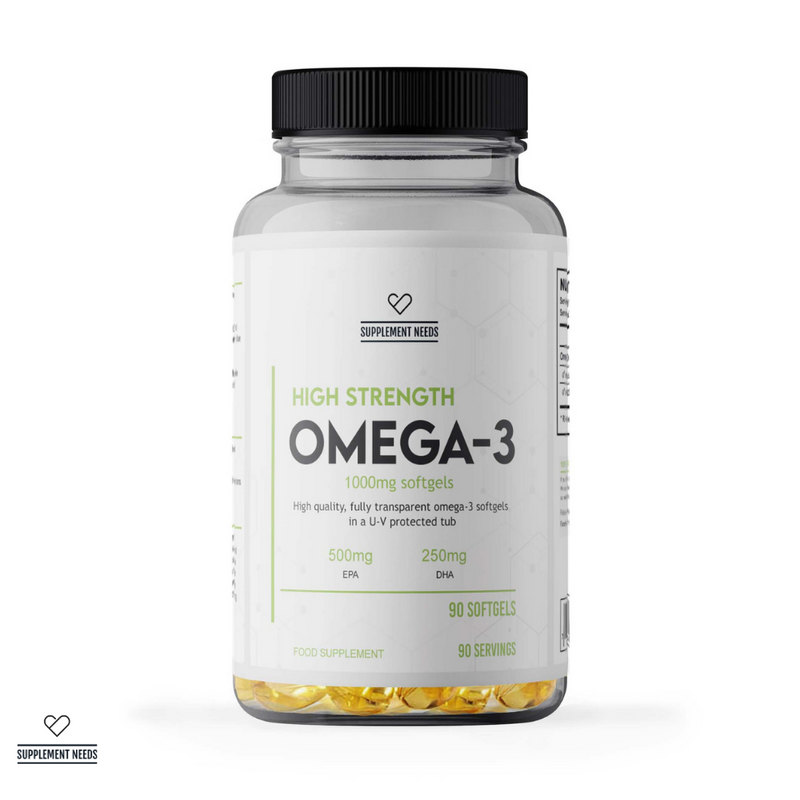
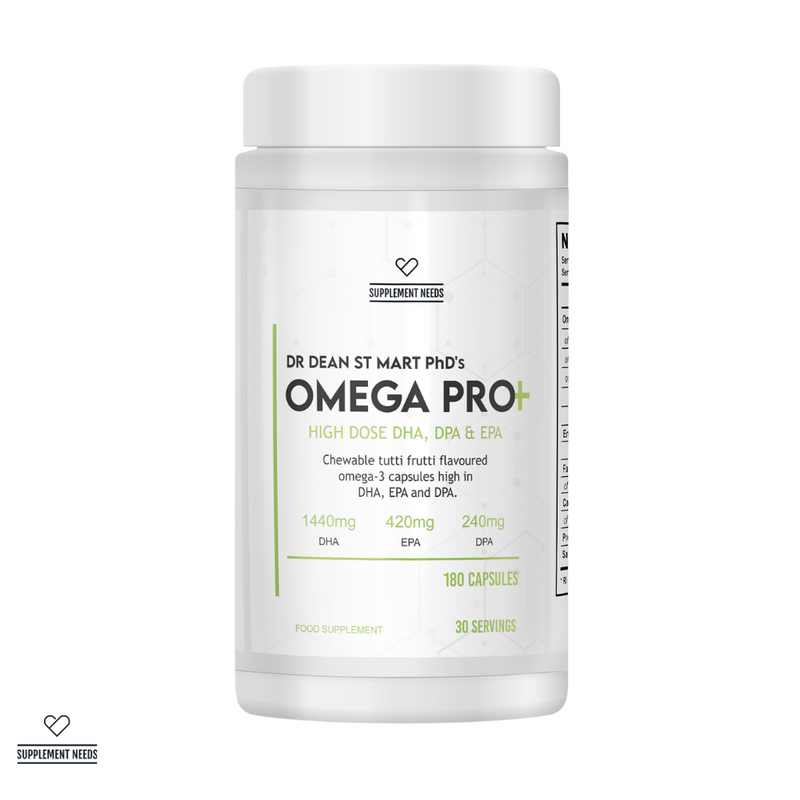
If you’re going to be supplementing your diet with additional sources of Chondroitin, then the scientific evidence suggests you should be adding Omega-3 fatty acids into the mix, too.
Both EPA and DHA (the core Omega-3 fatty acids) have anti-inflammatory effects and have been shown to reduce pain in arthritis populations. A meta-analysis reported improvements in joint pain with Omega-3 supplementation19.
Whilst Omega-3 targets inflammatory pathways, Chondroitin has been shown to influence cartilage integrity - meaning the two supplements represent complementary, not redundant strategies.
Is Chondroitin safe?
Of course, every supplement (rightly or wrongly) has the perennial spectre hanging over it that is “is this supplement safe?”
The answer (factoring in some important caveats) is yes.
Chondroitin Sulphate has been studied for decades in osteoarthritis populations and is generally regarded as having a favourable safety profile when taken within clinically studied doses (typically 800-1,200mg as we saw earlier).
One of the most important long-term studies involving Chondroitin found that pharmaceutical-grade Chondroitin did not result in any major safety signals20.
Does Chondroitin have any side effects?
Luckily, Chondroitin does not have any severe side effects. Where it does have a physiological impact upon individuals, it tends to be limited to gastrointestinal symptoms, such as:
-
Nausea.
-
Diarrhoea.
-
Abdominal discomfort.
-
Bloating.
In controlled trials, these effects generally occurred at rates similar to placebo21.
Chondroitin and drug interactions
As with any supplement, it’s important to be aware of any interactions with any drugs/pharmaceutical solutions you may already be taking.
We’re not medical professionals - so should you consult your doctor rather than us if you have concerns regarding Chondroitin and drug interactions. However, as a general rule, you should:
-
Avoid mixing with anticoagulants: case reports have suggested that Chondroitin - particularly when taken in combination with Glucosamine - may enhance the anticoagulant effects of warfarin, potentially increasing bleeding risk22.
-
Avoid NSAIDS: Chondroitin has been frequently studied in patients who are also using non-steroidal anti-inflammatory drugs (NSAIDS). There is no strong evidence of a harmful pharmacokinetic interaction between Chondroitin and NSAIDS. In fact, some research has explored Chondroitin as part of a strategy to reduce long-term NSAID reliance due to its slower-onset symptomatic effects23.
What to look for in a Chondroitin supplement
We’re hoping that you’ve found Supplement Needs’ guide to Chondroitin both useful and interesting so far.
In fact, perhaps it has tipped you from being a potential consumer into an actual consumer.
If you fall into the latter camp, and you're generally thinking of buying a Chondroitin supplement, then what follows is a guide to buying the perfect Chondroitin supplement for your needs…
Look for a clinically-relevant dose
As we explored earlier, Chondroitin is only really efficacious if you’re taking it at clinically-validated doses.
So, that should be the first thing you look for in a Chondroitin supplement.
And, that dose should be between 800mg - 1,200mg per day.
But, don’t take this as a given! If you explore some of the offerings from major high-street supplement retailers, you’ll find that they provide a much lower dose of Chondroitin per capsule serving.
Unlike Supplement Needs… where our Glucosamine & Chondroitin supplement provides the clinically-relevant dose of 1,200mg of Chondroitin per day across 3 capsules.
So, in short, you want to look for Chondroitin supplements that:
-
Provide a clearly stated milligram amount of Chondroitin Sulphate.
-
Do not use proprietary blends that obscure individual ingredient dosing.
-
A total daily serving that aligns with the 800-1,200mg evidence range.
Look for Chondroitin Sulphate - not ‘cartilage extract’
Chondroitin exists in multiple sulphation patterns (e.g. Chondroitin-4-Sulphate and Chondroitin-6-Sulphate), and structural differences can influence biological interactions within the extracellular matrix24.
As a result, it’s important that the supplement you select one that explicitly states that it contains Chondroitin Sulphate rather than a vague ‘cartilage extract’ or ‘joint support complex’, as you may not be receiving the efficacious form of Chondroitin.
Purity and quality control
Because Chondroitin is derived from animal cartilage, manufacturing standards are critical.
Therefore, any Chondroitin supplement that you choose to buy should have been manufactured under a strict quality standard protocol such as Good Manufacturing Practices (GMP).
Note: all Supplement Needs products - including our Chondroitin supplement - are manufactured in line with GMP guidance meaning you can be assured of the highest purity and quality.
Cost per effective dose
When selecting a Chondroitin supplement, one of the most important things you should consider is the ‘cost per effective dose’ - not cost per bottle.
At Supplement Needs, we make this super easy to understand, providing a clear cost per serving label on each of our product descriptions.
Is Chondroitin right for you?
By this point, you’ve hopefully gained a deep understanding of Chondroitin and what it can potentially do for your health.
But, is it right for you? Should you consider adding it to your supplement regimen?
The answer is almost certainly yes, especially if you fall into one of the following population groups:
-
You suffer joint discomfort: if you regularly experience joint discomfort, especially in weight-bearing joints such as the knees and hips, then you should consider adding Chondroitin to your supplement stack.
-
You regularly engage in high-impact exercise: if your exercise patterns involve repetitive joint loading - such as running, weightlifting, or impact sports such as squash - then a dedicated Chondroitin or joint support supplement - will almost certainly be beneficial.
-
You want long-term joint support: if you want to protect your future health, and want to ensure your joints remain healthy before problems arise, then you’ll want to consider adding Chondroitin to your diet. This is a particularly good strategy as cartilage has limited regenerative capacity - so act now, before it degrades.
Supplement Needs Glucosamine & Chondroitin

For individuals like you looking to support your joint health through a structured supplementation strategy, Supplement Needs Glucosamine & Chondroitin can’t be beat. It provides a fully-transparent formula combining two of the most widely studied compounds used in cartilage-focused supplementation protocols.
Formulated at efficacious doses by Dr. Dean St Mart PhD, and manufactured to high quality standards, this supplement is designed to support connective tissue integrity, joint comfort, and long-term mobility.
Shop Supplement Needs Glucosamine & Chondroitin now
For more insights and information about supplements, read the Supplement Needs blog…
Glucosamine & Joint Health: What You Need to Know | Could a Vitamin Deficiency Be Making You Tired? | The Myth of ‘Clean Supplements’: Learning About Excipients, Fillers & Agents
Disclaimer:
The information on this website should not be used as a substitute for professional advice or care. If you have questions about your health, please contact your doctor.
References:
1. Wikipedia. Chondroitin sulfate [online]. Available at: https://en.wikipedia.org/wiki/Chondroitin_sulfate (Accessed on 23rd February 2026).
2. Weisman M, Weinblatt M, Vollenhoven. Management of Osteoarthritis [online]. Available at: https://www.sciencedirect.com/topics/pharmacology-toxicology-and-pharmaceutical-science/chondroitin (Accessed on 23rd February 2026).
3. Hosey M. Diversity of structure, signaling and regulation within the family of muscarinic cholinergic receptors [online]. Available at: https://faseb.onlinelibrary.wiley.com/doi/10.1096/fasebj.6.3.1740234 (Accessed on 26th February 2026).
4. Terao T, Abe H, Abe K. Irreversible sinus node dysfunction induced by resumption of lithium therapy [online]. Available at: https://pubmed.ncbi.nlm.nih.gov/8792913/ (Accessed on 26th February 2026).
5. Yamada H, Miyauchi S, Hotta H, et. al. Levels of chondroitin sulfate isomers in synovial fluid of patients with hip osteoarthritis [online]. Available at: https://pubmed.ncbi.nlm.nih.gov/10436271/ (Accessed on 26th February 2026).
6. Kjaer M. Role of Extracellular Matrix in Adaptation of Tendon and Skeletal Muscle to Mechanical Loading [online]. Available at: https://journals.physiology.org/doi/full/10.1152/physrev.00031.2003 (Accessed on 26th February 2026).
7. Jerosch J. Effects of Glucosamine and Chondroitin Sulfate on Cartilage Metabolism in OA: Outlook on Other Nutrient Partners Especially Omega-3 Fatty Acids [online]. Available at: https://pmc.ncbi.nlm.nih.gov/articles/PMC3150191/ (Accessed on 26th February 2026).
8. Miwa H, Gerken T, Hering T. Effects of covalently attached chondroitin sulfate on aggrecan cleavage by ADAMTS-4 and MMP-13 [online]. Available at: https://pubmed.ncbi.nlm.nih.gov/16945513/ (Accessed on 26th February 2026).
9. Souich P, García A, Vergés J, Montell E. Immunomodulatory and anti-inflammatory effects of chondroitin sulphate [online]. Available at: https://pmc.ncbi.nlm.nih.gov/articles/PMC3828858/ (Accessed on 26th February 2026).
10. Troeberg L, Nagase H. Proteases involved in cartilage matrix degradation in osteoarthritis [online]. Available at: https://pmc.ncbi.nlm.nih.gov/articles/PMC3219800/ (Accessed on 26th February 2026).
11. Hayes A, Tudor D, Nowell M, et. al. Chondroitin sulfate sulfation motifs as putative biomarkers for isolation of articular cartilage progenitor cells [online]. Available at: https://pubmed.ncbi.nlm.nih.gov/17938280/ (Accessed on 26th February 2026).
12. Singh J, Noorbaloochi S, MacDonald R, Maxwell L. Chondroitin for osteoarthritis [online]. Available at: https://www.cochranelibrary.com/cdsr/doi/10.1002/14651858.CD005614.pub2/full (Accessed on 26th February 2026).
13. Black C, Clark C, Henderson R, et. al. The clinical effectiveness of glucosamine and chondroitin supplements in slowing or arresting progression of osteoarthritis of the knee: a systematic review and economic evaluation [online]. Available at: https://www.journalslibrary.nihr.ac.uk/hta/HTA13520 (Accessed on 26th February 2026).
14. Cochrane. Chondroitin for osteoarthritis [online]. Available at: 28th February 2026).
15. Iovu M, Dumais G, Souich P. Anti-inflammatory activity of chondroitin sulfate [online]. Available at: https://www.sciencedirect.com/science/article/pii/S1063458408002021 (Accessed on 28th February 2026).
16. Singh J, Noorbaloochi S, MacDonald R, Maxwell L. Chondroitin for osteoarthritis [online]. Available at: https://pmc.ncbi.nlm.nih.gov/articles/PMC4881293/ (Accessed on 28th February 2026).
17. Clegg D, Reda M, Harris C, et. al. Glucosamine, Chondroitin Sulfate, and the Two in Combination for Painful Knee Osteoarthritis [online]. Available at: https://www.nejm.org/doi/full/10.1056/NEJMoa052771 (Accessed on 28th February 2026).
18. Clark K, Sebastianelli W, Fleschsenhar K, et. al. 24-Week study on the use of collagen hydrolysate as a dietary supplement in athletes with activity-related joint pain [online]. Available at: https://pubmed.ncbi.nlm.nih.gov/18416885/ (Accessed on 28th February 2026).
19. Goldberg R, Katz J. A meta-analysis of the analgesic effects of omega-3 polyunsaturated fatty acid supplementation for inflammatory joint pain [online]. Available at: https://pubmed.ncbi.nlm.nih.gov/17335973/ (Accessed on 28th February 2026).
20. Bruyère O, Honvo G, Veronese N, et. al. An updated algorithm recommendation for the management of knee osteoarthritis from the European Society for Clinical and Economic Aspects of Osteoporosis, Osteoarthritis and Musculoskeletal Diseases (ESCEO) [online]. Available at: https://www.esceo.org/sites/esceo/files/pdf/Bruyere_SemA%26R_KOA_2019.pdf (Accessed on 28th February 2026).
21. Baden K, Hoeksema S, Gibson N, et. al. The Safety and Efficacy of Glucosamine and/or Chondroitin in Humans: A Systematic Review [online]. Available at: https://pmc.ncbi.nlm.nih.gov/articles/PMC12250884/ (Accessed on 28th February 2026).
22. Knudsen J, Sokol G. Potential glucosamine-warfarin interaction resulting in increased international normalized ratio: case report and review of the literature and MedWatch database [online]. Available at: https://pubmed.ncbi.nlm.nih.gov/18363538/ (Accessed on 28th February 2026).
23. Baden K, Hoeksema S, Gibson N, et. al. The Safety and Efficacy of Glucosamine and/or Chondroitin in Humans: A Systematic Review [online]. Available at: https://pmc.ncbi.nlm.nih.gov/articles/PMC12250884/ (Accessed on 28th February 2026).
24. Bertolotto A, Palmucci L, Mongini T, Schiffer D, Caterson B. Chondroitin, chondroitin 6-sulphate, chondroitin 4-sulphate and dermatan sulphate proteoglycans in normal and pathological human muscle [online]. Available at: https://pubmed.ncbi.nlm.nih.gov/3694231/ (Accessed on 1st March 2026).