






If you’re trying to conceive, and exploring natural ways to support your fertility, there’s one supplement you’ve probably never heard of - but should: NAC. Backed by clinical research, N-Acetyl-Cysteine is a powerful antioxidant that may help improve ovulation, balance hormones, and enhance egg quality, especially in women with PCOS or unexplained infertility. Want the full story? Then keep reading and the Supplement Needs team will tell you everything you need to know…
TL;DR
Don’t want to read the whole article? Then here’s the key point:
-
NAC (N-Acetyl-Cysteine) is an antioxidant shown to support fertility - raising Glutathione, reducing oxidative stress, improving egg/embryo quality, and restoring ovulation.
What is NAC (N-Acetyl-Cysteine)?
As we always do here at Supplement Needs, let’s kick things off with a definition.
What, exactly, is NAC? What is it used for? And, what is the science that underpins it?
To get straight to the point, N-Acetyl-Cysteine is a modified form of the amino-acid cysteine that’s widely used both as a prescription medicine and as an over-the-counter supplement. In biochemistry terms, NAC is the building block upon which your body creates Glutathione (GSH), your body’s master antioxidant.
Thus, one of NAC’s primary physiological effects is to reduce oxidative stress and free radical damage within your body1.
However, NAC is not produced endogenously (within your body) in significant amounts, with most people having only low-concentrations of NAC within their blood plasma2 (typically around 100nM in healthy people).
As a result, if you want to measurably increase NAC levels within your body (similar to the levels you see in clinical trials)3, you should consider a NAC supplement - but, we’ll cover this in more detail later in this article.
How does NAC work?
Of course, the immediate question you’re likely to have is, “how does NAC actually work within the body?”
The technical answer is that NAC supplies L-Cysteine which feeds into the γ-glutamyl cycle to synthesise reduced glutathione (GSH). This GSH participates in redox reactions and regenerates other antioxidants; NAC also has direct free-radical scavenging actions and can modulate inflammatory signalling (such as the NF-κB pathways)4.
We appreciate that’s a rather technical explanation - so, how does NAC work in simpler terms?
Put simply, NAC helps your cells make and recycle the body’s main antioxidant (Glutathione) and also dampens inflammation. Together, these two things lower the kind of molecular damage that harm cells and organs.
What does NAC have to do with fertility?
Sure, NAC can help produce antioxidants and dampen inflammation within the body. But, what does this have to do with fertility? And, why has NAC become a much studied subject within fertility science?
The answer lies in the interrelation between infertility and oxidative stress.
Oxidative stress has been identified in a multiplicity of studies5 as a contributor to poorer egg (oocyte) quality, impaired embryo development, and implantation failure - especially in conditions such as PCOS and metabolic dysfunction.
With this in mind, researchers have tested NAC as an adjunct in fertility care (because it replenishes Glutathione and lowers oxidative stress). Trials with NAC have looked at ovulation induction, metabolic markers, and pregnancy/live-birth endpoints in women with PCOS or those undergoing assisted reproduction.
The results?
Well, several randomised trials (in addition to a systematic review/meta analysis) have reported higher ovulation and pregnancy rates with NAC versus placebo. The evidence is promising, but mixed, and results vary by study design and dose. As a result, NAC is being positioned as a supporting therapy rather than a fertility ‘cure’ per se6.
The breakthrough study?
Perhaps the most important study that has excited researchers regarding the link between NAC supplementation and fertility, is this 2022 study conducted by Li, et al7.
This was a prospective, single-blinded randomised controlled trial that involved 200 women over the age of 35 years who were scheduled for IVF treatment. The group was split into two; one group that would be supplementing NAC, and a control group that would not.
The group supplementing NAC took an oral dose of 600mg of NAC three times a day (starting in the menstrual phase of the cycle).
In terms of primary outcomes, the study creators were looking for the number of high-quality blastocysts and Glutathione content in follicular fluid.
The results?:
-
The NAC group produced more high-quality blastocysts per patient, indicating improved embryo quality with NAC supplementation.
-
Glutathione in follicular fluid was significantly higher in the NAC group vs the control group.
Furthermore, no adverse effects attributable to NAC were reported in the trial.
It has been this study - arguably more than any other - that has really triggered an intense interest in NAC supplementation and fertility outcomes. Expect to see far more studies on NAC and fertility in the years ahead.
NAC and fertility: the mechanisms of action
As you’ve just read, there’s a fairly clear emerging evidence base that NAC can potentially support female fertility.
We’ve also seen that NAC directly feeds into the Glutathione synthesis cycle - the production of your body’s master antioxidant.
But, how does NAC directly relate to those physiological processes that contribute to fertility? In this next section, we’ll take a closer look at these processes and how they work.
Balancing hormones and improving ovulation
Clinical trials and meta-analyses8 have shown that NAC can potentially increase ovulation and pregnancy in women with PCOS - especially when NAC is supplemented alongside standard fertility drugs.
How does NAC achieve this, though?
It appears that NAC helps to reduce circulating androgens, whilst also increasing follicle-stimulating hormone (FSH) levels. In other words, NAC promotes hormone shifts that favour follicle maturation and ovulation. This isn’t just our assertion, though. Systematic reviews9 have borne out this contention.
Key takeaway: for many women - especially those with PCOS - there is a good body of evidence to suggest that NAC will help them ovulate. NAC has been shown repeatedly to raise ovulation rates compared with placebos.
Reducing oxidative stress in the ovaries
This mechanism perhaps does not come as a surprise given NAC’s link with Glutathione production. However, recent studies have particularly reinforced the link between NAC and the reduction of oxidative stress in the ovaries via Glutathione production.
This is especially pertinent given that follicular fluid Glutathione levels (and other oxidative-stress markers) correlate strongly with oocyte quality and embryo development. In other words, high oxidative stress in follicular fluid is linked with poorer embryo competence.
So, what exactly is the mechanism here? To summarise it in a single sentence, NAC raises intra-follicular Glutathione and reduces oxidative markers, thereby protecting oocytes from oxidative damage during the critical window of maturation10.
On a more speculative basis, a small set of lab and animal studies11 have suggested that NAC may also boost mitochondrial function in oocytes. As mitochondria are essential for egg energy production and embryo development, researchers posit that NAC’s antioxidant action (as well as the activation of protective signalling pathways such as Nrf2) may preserve mitochondrial health and reduce apoptosis (this being ‘cell death’) in ovarian tissue.
Key takeaway: NAC can potentially help ‘clean up’ damaging free radicals around the egg as well as supporting the egg’s ‘energy machinery’.
Supporting insulin sensitivity
This is a PCOS-specific process, but one that has wider implications for fertility.
At the risk of oversimplifying, high insulin levels are bad for key fertility markers. High insulin can worsen ovarian androgen production, disrupt follicle development, and even prevent regular ovulation.
So, where does NAC come into this?
Well, studies suggest that NAC can have insulin-sensitising effects, resulting in improvements in glucose levels, insulin markers, and some lipid parameters.
Furthermore, these studies have even put NAC head-to-head with prescription drugs like metformin (commonly used to treat type 2 diabetes), finding that NAC can ‘perform comparably to metformin for certain metabolic endpoints’12.
Via this mechanism (lowering glucose and insulin levels), NAC has the indirect effect of creating a more favourable physiological environment for regular ovulation and better endometrial receptivity.
This view has been further reinforced by studies13 that combine NAC supplementation with common ovulation agents (such as Clomiphene and Letrozole). These studies found that when combined, NAC and an ovulation agent resulted in higher ovulation and pregnancy rates than with the ovulation agent alone.
Key takeaway: NAC can often calm the metabolic issues that sit behind PCOS, helping to make fertility drugs work better and increasing the chance of ovulation and pregnancy (in some, but not all cases).
So, the key point to remember here is that NAC effectively assists fertility via three complementary and overlapping mechanisms:
-
Balancing hormones.
-
Reducing oxidative stress.
-
Supporting insulin sensitivity.

Is NAC safe to take whilst trying to conceive?
Naturally, if you’ve read this far and you’re on your own fertility journey, you may be considering adding NAC to your diet.
The thing is, is it safe to take NAC whilst you’re trying to conceive?
The short answer - this is a question that only you and your doctor can answer and agree upon. Everyone is different, and any supplement should only be taken with appropriate medical advice and guidance.
However, looking at this question more broadly, we can see that:
-
Large and small fertility trials that used oral NAC (at a dose of approximately 600mg once to three times daily), report no serious safety signals14.
-
Where side-effects do occur, they are generally limited to stomach upset or nausea.
-
Broader safety reviews15 across many indications (e.g. respiratory disease, liver support, chronic conditions), find oral NAC is generally safe, even when taken over a long period.
Whilst these studies generally support NAC supplementation as being safe, there are some important drug interactions to be aware of. In some instances, NAC has demonstrated negative interactions with anticoagulants16 and certain angina medications17. It has also been suggested that NAC may change the levels of some drugs (e.g. Carbamazepine).
The key point here is that you should always check with your doctor before taking NAC whilst you’re trying to conceive.
How to add NAC to your diet/supplementation regime
Should you decide to add NAC to your diet and/or supplementation regime, then there are a number of ‘best practices’ that you can follow in order to maximise the potential benefits.
Amongst the points to consider include:
-
Dose: as we saw earlier, studies18 have demonstrated marked effects from NAC at a dose of 600mg or more. Here at Supplement Needs, our TUDCA + NAC supplement provides NAC at a slightly larger dose of 900mg. This is because NAC has a short plasma life and modest oral bioavailability - so we have upped the volume to ensure your body does actually receive an efficacious amount of NAC.
-
Take NAC with food: as with many other supplements, NAC is best taken alongside a meal. This is because food may reduce any adverse effects such as nausea.
-
Persistence: like other supplements, it may take some time before you see the benefits of NAC. For example, in the PCOS trials that we referenced above, these took place over 3 months in order for the NAC supplementation to translate into meaningful blood serum levels. Interestingly, a similar duration of supplementation was required for male fertility trials19.
-
Quality matters: in order to get the most out of a NAC supplement, the supplement itself must be of the highest quality. Look for products that have adhered to Good Manufacturing Process protocols.
How to choose a NAC supplement
Choosing the right NAC supplement matters as formulation can affect how much NAC actually reaches your bloodstream.
As we often say here at Supplement Needs - “not all supplements are created equal” - and that’s certainly the case for NAC.
If you want to follow the clinical evidence that we’ve set out in this article, then you’ll want a supplement that provides NAC in an oral dose (e.g. capsule delivery)20. You should also look for:
-
Good Manufacturing Process (GMP): this is a set of quality controls and standards that are used to ensure that supplements are consistently made and controlled to the required quality, safety, and efficacy standards. ALL Supplement Needs products are manufactured to GMP protocols.
-
Clear dose labelling: it is essential that you are able to see the actual dose that your chosen NAC supplement delivers. This is integral to ensuring you’re taking a supplement that will actually deliver the purported benefits. Supplement Needs provides clear dosage information on all our supplements.
-
Transparent ingredient list: you should ensure that your chosen supplement is completely transparent about what it contains. As you’d expect, Supplement Needs provides a detailed breakdown of every ingredient of our supplements.
In short, product quality is more important than marketing claims!
Other ingredients to look for
If you’re looking to buy a broader fertility-focused multivitamin, then there are a number of other ingredients to look for that complement NAC. These ingredients - that target complementary mechanisms within the body - include:
-
Folate: folate fuels DNA synthesis and methylation, whilst NAC supplies cysteine to boost Glutathione production and cuts oxidative stress. Together, these two ingredients support both DNA integrity, and the cellular environment for conception21.
-
Inositol: several trials that combined Inositol and NAC reported improvements in ovulation/menstrual regularity22.
-
CoQ10: this mitochondrial antioxidant is typically stacked with NAC in fertility contexts. Furthermore, CoQ10 has a strong body of evidence in its own right that it can potentially support fertility23.
So, choosing a NAC supplement that also contains complementary substances is a practical, science-based way of maximising the potential benefits of your supplement.
The best fertility supplements that contain NAC
Here at Supplement Needs, our deep understanding of the science underpinning fertility means that we have developed a series of female supplements that don’t just contain NAC - but other complementary substances as well.
Below, you’ll find our top fertility supplements that have been formulated on this basis:
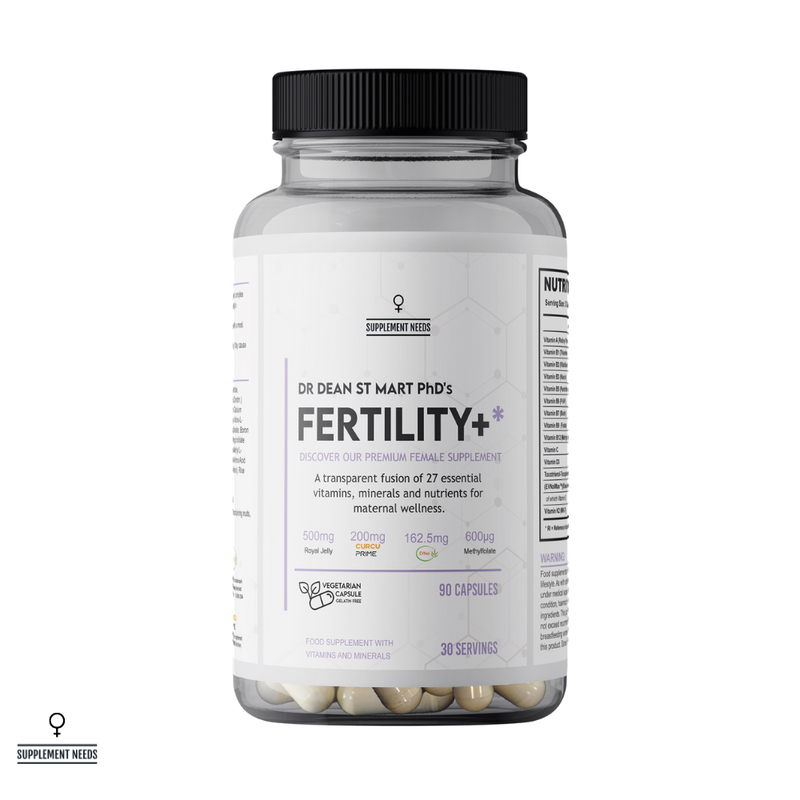
Supplement Needs Female Fertility+

If you’re a woman who is trying to conceive and you want a single, evidence-based product that addresses egg quality, one-carbon metabolism, and antioxidant protection, then you can’t do much better than Supplement Needs Female Fertility+.
Some of the key reasons you should consider investing in Female Fertility+ include:
-
Clinically aligned doses: NAC, methylfolate, and CoQ10 are included at the research-relevant levels that are used in fertility studies.
-
Once-a-day convenience: Dr. Dean St. Mart PhD has formulated Female Fertility+ so that it is easy to take and stick to on a daily basis.
-
Active ingredients: we have designed Female Fertility+ to include the active, most bioavailable forms of the ingredients. For example, this supplement uses methylfolate (the active form of folate), which is useful if you have known MTHFR issues.
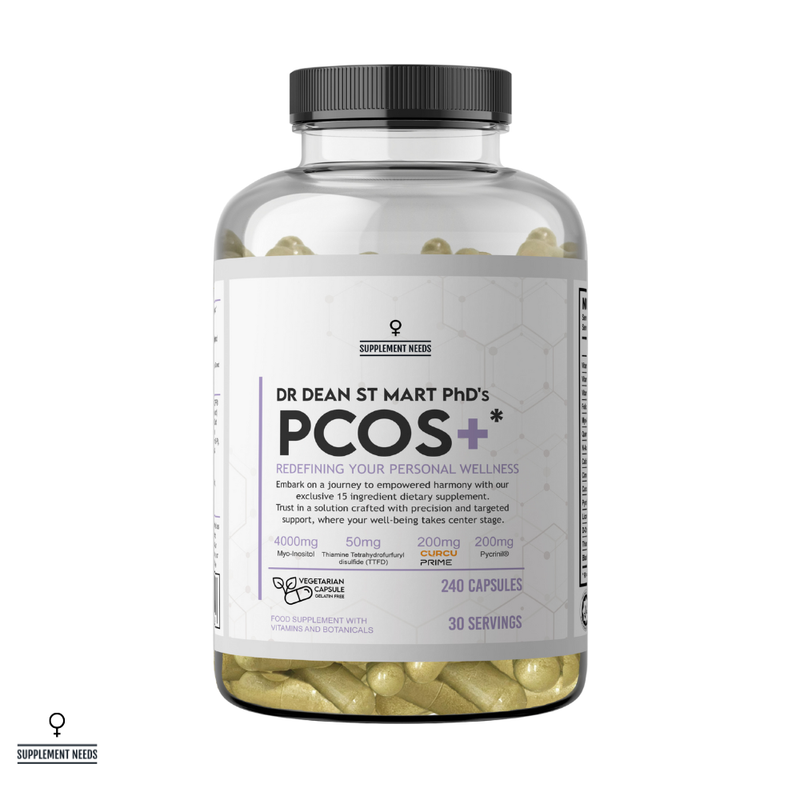
Supplement Needs Female PCOS+

If you have been diagnosed with PCOS and want a single, evidence-based supplement that includes Inositol, NAC, and methylfolate and B vitamins (which have been shown in studies to benefit ovulation when combined24), then choose Supplement Needs Female PCOS+.
Why take Supplement Needs Female PCOS+? Because:
-
We have used research-aligned dosing: with 4g of myo-inositol per serving and an included NAC dose that mirrors the common clinical protocols used in PCOS studies.
-
It’s a multi-mechanism approach: instead of having to take separate supplements for insulin, antioxidant support, and methylation support, Female PCOS+ combines them in one, handy-to-take regimen to simplify adherence and reduce ‘pill fatigue’.
-
It is a clinician-friendly formulation: Female PCOS+ provides clear, transparent labelling, making it easy for GPs and fertility specialists to monitor and integrate the supplement into your broader fertility regime.
Take the next step on your fertility journey…
… with Supplement Needs. If you want to turn the science you’ve just read about into action, then explore our female health range today. Designed and formulated by renowned industry expert Dr. Dean St Mart PhD in conjunction with world-leading female health specialists, our Female Needs range is unparalleled.
Explore the Female Needs range now
For more insights and information about supplements, read the Supplement Needs blog…
What Should You Look for in Pregnancy Supplements? | The Best Supplements for PMS: The Supplement Needs Guide | What Supplements Help Pregnancy?
Disclaimer:
The information on this website should not be used as a substitute for professional medical advice or care. If you have questions about your health, please contact your doctor.
References:
1. Tenorio M, Graciliano N, Moura F, et. al. N-acetylcysteine (NAC): Impacts on Human Health [online]. Available at: https://pmc.ncbi.nlm.nih.gov/articles/PMC8234027/ (Accessed on 29th January 2026).
2. Tsikas D, Mikuteit M. N-Acetyl-cysteine in human rheumatoid arthritis and its effects on nitric oxide (NO) and malondialdehyde (MDA): analytical and clinical considerations [online]. Available at: https://pmc.ncbi.nlm.nih.gov/articles/PMC9372125/ (Accessed on 1st February 2026).
3. Ezerina D, Takano Y, Hanaoka K, et. al. N-acetyl cysteine functions as a fast-acting antioxidant by triggering intracellular H₂S and sulfane sulfur production [online]. Available at: https://pmc.ncbi.nlm.nih.gov/articles/PMC6455997/ (Accessed on 1st February 2026).
4. ibid.
5. Thakker D, Raval A, Patel I, Walia R. N-Acetylcysteine for Polycystic Ovary Syndrome: A Systematic Review and Meta-Analysis of Randomised Controlled Clinical Trials [online]. Available at: https://pmc.ncbi.nlm.nih.gov/articles/PMC4306416/ (Accessed on 30th January 2026).
6. Salehpour S, Sene A, Saharkhiz N, Sohrabi M, Mohhimian F. N-Acetylcysteine as an adjuvant to clomiphene citrate for successful induction of ovulation in infertile patients with polycystic ovary syndrome [online]. Available at: https://pubmed.ncbi.nlm.nih.gov/22540635/ (Accessed on 30th January 2026).
7. Li X, Wang Z, Wang H, Xu H, Sheng Y, Lian F. Role of N-acetylcysteine treatment in women with advanced age undergoing IVF/ICSI cycles: A prospective study [online]. Available at: https://pmc.ncbi.nlm.nih.gov/articles/PMC9577027/ (Accessed on 1st February 2026).
8. Thakker D, Raval A, Patel I, Walia R. N-Acetylcysteine for Polycystic Ovary Syndrome: A Systematic Review and Meta-Analysis of Randomised Controlled Clinical Trials [online]. Available at: https://pmc.ncbi.nlm.nih.gov/articles/PMC4306416/ (Accessed on 1st February 2026).
9. ibid.
10. Chen Y, Yang J, Zhang L. The Impact of Follicular Fluid Oxidative Stress Levels on the Outcomes of Assisted Reproductive Therapy [online]. Available at: https://pmc.ncbi.nlm.nih.gov/articles/PMC10740420/ (Accessed on 1st February 2026).
11. Fan L, Guan F, Ma Y, et. al. N-Acetylcysteine improves oocyte quality through modulating the Nrf2 signaling pathway to ameliorate oxidative stress caused by repeated controlled ovarian hyperstimulation [online]. Available at: https://pubmed.ncbi.nlm.nih.gov/35513370/ (Accessed on 1st February 2026).
12. Liu J, Su H, Jin X, et. al. The effects of N-acetylcysteine supplement on metabolic parameters in women with polycystic ovary syndrome: a systematic review and meta-analysis [online]. Available at: https://www.frontiersin.org/journals/nutrition/articles/10.3389/fnut.2023.1209614/full (Accessed on 1st February 2026).
13. Salehpour S, Sene A, Saharkhiz N, et. al. N-acetylcysteine as an adjuvant to clomiphene citrate for successful induction of ovulation in infertile patients with polycystic ovary syndrome [online]. Available at: https://obgyn.onlinelibrary.wiley.com/doi/full/10.1111/j.1447-0756.2012.01844.x (Accessed on 1st February 2026).
14. Thakker D, Raval A, Patel I, Walia R. N-Acetylcysteine for Polycystic Ovary Syndrome: A Systematic Review and Meta-Analysis of Randomized Controlled Clinical Trials [online]. Available at: https://pmc.ncbi.nlm.nih.gov/articles/PMC4306416/ (Accessed on 1st February 2026).
15. Calverley P, Rogliani P, Papi A. Safety of N-Acetylcysteine at High Doses in Chronic Respiratory Diseases: A Review [online]. Available at: https://pmc.ncbi.nlm.nih.gov/articles/PMC7892733/ (Accessed on 1st February 2026).
16. National Library of Medicine: National Centre for Biotechnology Information. N-Acetylcysteine [online]. Available at: https://www.ncbi.nlm.nih.gov/books/NBK537183/ (Accessed on 1st February 2026).
17. Horowitz J, Henry C, Syrjanen M, et. al. Combined use of nitroglycerin and N-acetylcysteine in the management of unstable angina pectoris [online]. Available at: https://pubmed.ncbi.nlm.nih.gov/3127076/ (Accessed on 1st February 2026).
18. Thakker D, Raval A, Patel I, Walia R. N-Acetylcysteine for Polycystic Ovary Syndrome: A Systematic Review and Meta-Analysis of Randomised Controlled Clinical Trials [online]. Available at: https://pmc.ncbi.nlm.nih.gov/articles/PMC4306416/ (Accessed on 1st February 2026).
19. Elgar K. N-acetylcysteine: A Review of Clinical Use and Efficacy [online]. Available at: https://www.nmi.health/n-acetylcysteine-a-review-of-clinical-use-and-efficacy/ (Accessed on 1st February 2026).
20. Tenório M, Graciliano N, Moura F, et. al. N-Acetylcysteine (NAC): Impacts on Human Health [online]. Available at: https://pmc.ncbi.nlm.nih.gov/articles/PMC8234027/ (Accessed on 1st February 2026).
21. Laanpere M, Altmäe S, Stavreus-Evers A, et. al. Folate-mediated one-carbon metabolism and its effect on female fertility and pregnancy viability [online]. Available at: https://pubmed.ncbi.nlm.nih.gov/20137055/ (Accessed on 1st February 2026).
22. Sacchinelli A, Venturella R, Lico D, et. al. The Efficacy of Inositol and N-Acetyl Cysteine Administration (Ovaric HP) in Improving the Ovarian Function in Infertile Women with PCOS with or without Insulin Resistance [online]. Available at: https://pubmed.ncbi.nlm.nih.gov/24876842/ (Accessed on 1st February 2026).
23. Florou P, Anagnostis P, Theocharis P, et. al. Does coenzyme Q10 supplementation improve fertility outcomes in women undergoing assisted reproductive technology procedures? A systematic review and meta-analysis of randomised-controlled trials [online]. Available at: https://pmc.ncbi.nlm.nih.gov/articles/PMC7550497/ (Accessed on 1st February 2026).
24. Sacchinelli A, Venturella R, Lico D, et. al. The Efficacy of Inositol and N-Acetyl Cysteine Administration (Ovaric HP) in Improving the Ovarian Function in Infertile Women with PCOS with or without Insulin Resistance [online]. Available at: https://pmc.ncbi.nlm.nih.gov/articles/PMC4021745/ (Accessed on 1st February 2026).