











If there’s one mineral that’s more closely associated with sleep than any other, it has to be Magnesium. That’s presumably why you’ve arrived at this page! But, as with many health topics, the subject of Magnesium is subject to many apocryphal tales, misinformation and downright confusing assertions. If you want the truth about Magnesium, then this guide from the Supplement Needs team is for you…
Does Magnesium help you sleep?
Le’ts get straight to the point - does Magnesium really help you sleep better?
Well, like many supplement-based questions - the answer is a nuanced one.
Magnesium can help some people sleep better. But, it’s not a ‘magic knockout’ supplement, and shouldn’t be considered the definitive universal sleep supplement for everyone.
Rather than being viewed as an acute sedative, Magnesium should instead be viewed as a foundational mineral that sets the scene for optimal biological sleep pathways.
How does Magnesium interact with sleep?
As we’ve written previously, sleep is a complex physiological process that involves multiple metabolic pathways.
Magnesium contributes significantly to those pathways.
The biological pathways that Magnesium contributes to includes:
-
Nervous system excitability.
-
Muscle relaxation.
-
Stress regulation.
-
Neurotransmitter signalling.
These are all integral to proper sleep.
Mechanistically, there is a pretty solid rationale for why Magnesium might be one of the most important minerals for supporting your sleep. For example, Magnesium helps regulate NMDA glutamate receptors - part of the brain’s excitatory signalling system - and is also discussed in relation to GABAergic activity, the body’s main calming neurotransmitter pathway1.
This being the case, researchers have understandably delved into the relationship between Magnesium and sleep in considerable detail. What they found was a nuanced, yet effective picture for Magnesium supplementation:
-
A 2021 systematic review and meta-analysis looking at oral magnesium supplementation for insomnia in older adults involving 150 participants reported a reduction in sleep onset latency (in layman’s terms, participants were able to get to sleep more quickly)2.
-
A more recent 2025 randomised, placebo-controlled trial of Magnesium bisglycinate in adults with self-reported poor sleep found that 250 mg of elemental Magnesium per day modestly improved insomnia severity compared to placebo3.
-
A 2012 double-blind randomised clinical trial involving 46 elderly participants with primary insomnia found that 500 mg of Magnesium per day for eight weeks improves sleep time, sleep efficiency and sleep onset latency compared to placebo4.
-
A 2024 randomised controlled trial of Magnesium L-threonate in 80 adults with self-reported sleep problems found improvements in sleep quality and daytime functioning, including measures related to mood, energy, alertness, and productivity5.
-
A 2023 systematic review of available literature found that observational studies generally linked better Magnesium status with better quality sleep duration and daytime sleepiness scores6.
Taken together, these studies (amongst numerous others), suggest that Magnesium is a plausible, and for many people, useful sleep aid - at least in providing the foundations for improved sleep hygiene.
Who may benefit from Magnesium supplementation for sleep?
As we hinted at the outset of this article, whilst Magnesium has a strong and thorough evidence-base in relationship to improved sleep outcomes - it won’t necessarily work for everyone.
So, if you’re reading this and wondering if you may fall into the ‘pro-Mg’ camp, we’ve outlined the population groups who are most likely to benefit from this magnificent mineral below:
People with low Magnesium intake
Yes, we appreciate this is a blindingly obvious point - but, if you have a nutritionally low level of Magnesium intake, you’re likely to benefit from Magnesium supplementation for sleep.
This is more of a widespread problem than you’re likely to realise. Despite Magnesium being available in a broad range of foodstuffs, studies and national dietary surveys indicate that many segments of the population are not consuming enough Magnesium. As one secondary analysis of the UK National Diet and Nutrition Survey characterised the situation; ‘Sizeable gaps were found for Magnesium with 19% of young people in their twenties having intakes below the LRNI (Lower Reference Nutrient Intake).
So, you may be deficient in Magnesium (and consequently suffering poor sleep quality) without even realising it.
Consider that although Magnesium-rich foods include nuts, seeds, leafy greens, legumes, and whole grains, many diets today are deficient in these foods and instead rely on high and ultra-processed alternatives.
Yet, the evidence for increased Magnesium intake and improved sleep quality is both real and compelling.
For example, a large longitudinal study using CARDIA (Coronary Artery Risk Development in Young Adults) cohort data found that higher Magnesium intake was associated with better sleep quality and a greater likelihood of achieving the recommended seven to nine hours of sleep per night7.
A more recent study conducted in 2025 found that university students with a higher dietary Magnesium intake experienced better sleep quality, longer sleep duration and reduced daytime dysfunction8.
If, then, you suspect you may have a Magnesium deficiency, additional supplementation may well be the key to improving your overall sleep hygiene.
Older adults
It’s something of a trope that you struggle to sleep well when you are older.
However, a slew of observational data and studies bear this out. If you’re an older adult, Magnesium supplementation may well be beneficial in improving your sleep habits. Let’s take a look at some of the data.
The 2021 systematic review that we mentioned earlier (involved ~150 older adults), found that regular Magnesium supplementation allowed participants to fall asleep faster compared to study participants using a placebo9.
Another study that we mentioned earlier also looked at Magnesium and sleep in 46 older adults. Participants took 500 mg of Magnesium daily for a period of eight weeks. The result? Improved sleep time, sleep efficiency, sleep onset latency, and insomnia severity10.
Whilst we can’t say definitively that all older people with sleep problems will benefit from Magnesium supplementation - there is certainly a compelling evidence base to suggest so. For many older adults, the reality may be that Magnesium supplementation is most useful where poor sleep exists alongside low dietary intake, muscle tension, restless leg syndrome, and other related conditions.
People with stress-drive sleep issues
For some people stress is a major disruptor of their sleep. They can’t get to sleep. When they do get to sleep, it is disturbed. They don’t feel rested when they awaken.
So, what can Magnesium potentially do for such people?
Firstly, Magnesium is involved in the regulation of the hypothalamic-pituitary-adrenal axis (HPA axis), which helps control the body’s stress response. A 2025 review on the mechanisms of Magnesium in sleep disorders discusses several pathways through which Magnesium may influence sleep, including cortisol regulation, NMDA receptor modulation, GABA signalling, melatonin pathways, and nervous system excitability11.
It’s Magnesium’s relationship with the body’s stress response that is key here.
Secondly, there is actually a broader subset of research that links Magnesium status with stress biology. A review on the ‘Magnesium and stress vicious circle” concept described how stress may increase Magnesium loss, whilst low Magnesium status may make the body more vulnerable to stress12. You can see how such a cycle can be self-perpetuating. Therefore, there is a clear response here in the form of Magnesium supplementation to break said cycle.
Another systematic review from 2024 that examined supplemental Magnesium for self-reported anxiety and sleep quality concluded that Magnesium may be useful in mild anxiety and insomnia, particularly in people with low Magnesium intake status at baseline13.
Combing over this evidence in its totality, it seems safe to say that Magnesium may help some people move from a stress-induced ‘wired’ state, towards a calmer psychological state that is more conducive to healthy sleep patterns.
People with muscle tension or cramps
Another reason for disturbed sleep can be muscle tension and/or cramps.
This can be related to Magnesium intake due to it being involved in normal muscle and nerve function.
There is, however, a limited evidence base for Magnesium in relation to the alleviation of cramps and tension. For example, a Cochrane review on Magnesium for skeletal muscle cramps concluded that Magnesium supplementation is unlikely to provide clinically meaningful cramp prevention14 - however, this shouldn’t rule out using Magnesium for the broader sleep-adjacent reasons we have described above.
Athletes and active people
If you’re an athlete and/or a generally very active individual, then you have good cause to pay attention to Magnesium.
Why?
Because, exercise changes your body’s metabolism of Magnesium. A review on Magnesium and exercise noted that physical activity can cause magnesium to redistribute around the body in response to metabolic demands, and that Magnesium is involved in processes relevant to muscle function, oxygen uptake, energy production, and electrolyte balance15.
At the risk of engaging in an oversimplified heuristic - if you exercise more, you’re going to need more Magnesium in your diet.
There is further evidence to support this heuristic.
A study that looked at intense exercise and heat exposure can increase Magnesium losses. An NCBI text on mineral metabolism during exercise and heat notes that Magnesium can be lost through sweat, and that urinary Magnesium loss may increase after intense exercise16.
Thus, for people who train hard, sweat regularly, and engage in high-intensity physical exertion, it’s worth paying close attention to your dietary Magnesium intake.
Individuals with restless legs syndrome
Restless legs syndrome - also known as RLS - is a neurological condition characterised by uncomfortable leg sensations and an urge to move the legs, that is often worse in the evening or night. Because RLS directly interferes with sleep, Magnesium is sometimes discussed as a possible support.
There is a degree of evidence to support this supposition.
A 2022 randomised controlled trial reported that Magnesium and Vitamin B6 supplementation reduced the severity of restless legs syndrome and improved sleep quality17.
A further systematic review conducted in 2024 into dietary supplementation in restless legs syndrome also found that Magnesium and Vitamin B6 may improve RLS symptom and severity and sleep quality18.
How does Magnesium support sleep?
So far, we’ve looked at the evidence for how Magnesium interacts with sleep-based pathways. We’ve also examined the population groups who are most likely to benefit from Magnesium supplementation in this regard.
But, in this next section, we want to take a deeper dive into how Magnesium supports sleep at a mechanistic level.
Magnesium may calm brain excitability
One of the main ways Magnesium may support sleep is by helping to regulate excitatory signalling in the brain.
Think of it this way: your brain relies upon ‘go’ signals and ‘slow down’ signals. One of the major excitatory systems involves glutamate, the brain’s primary excitatory neurotransmitter. Glutamate is essential for learning, memory and normal brain function, but too much excitatory signalling at the wrong time can make the nervous system feel overactive - the sort of “switched on” state that makes it harder to fall asleep.
Magnesium is particularly relevant here because it naturally interacts with NMDA receptors, a type of glutamate receptor involved in excitatory neurotransmission. Research has shown that Magnesium ions can sit within the NMDA receptor channel and block calcium entry under resting conditions, effectively acting as a physiological ‘brake’ on excessive NMDA receptor activation19.
To put this in plain English: Magnesium helps stop certain brain cells from becoming too easily over-excited.
Magnesium may support GABA activity
If glutamate is one of the brain’s ‘go’ signals, GABA is one of its main ‘slow down’ signals.
GABA - short for gamma-aminobutyric acid - is the brain’s primary inhibitory neurotransmitter. Its job is to reduce neuronal firing and help calm the nervous system. This is one reason GABA signaling is so closely tied to sleep: many sedative medications, including benzodiazepines and Z-drugs, work by enhancing GABAergic activity, although Magnesium should not be compared directly with those drugs20.
Magnesium appears to interact with this side of the nervous system, too. A 2025 review on Magnesium and sleep disorders noted that Magnesium may induce sleep through both NMDA receptor antagonism and GABA-related mechanisms21.
Similarly, a large observational study on Magnesium intake, sleep duration, and sleep quality explains that Magnesium may play a role in sleep through regulation of the glutamatergic and GABAergic systems22.
Again, to look at this in more simplistic terms, Magnesium may help ‘tilt’ the nervous system away from excitation and towards inhibition.
Magnesium may support the stress response
Another reason Magnesium is relevant to sleep is its relationship with stress physiology.
Stress and sleep are closely linked. When the body is under stress, it activates the release of cortisol, one of the body’s main stress hormones. As we’ve written previously, this system helps regulate the release of cortisol - one of the body’s main stress hormones.
Cortisol is not ‘bad’; it is essential for waking up, responding to challenges and maintaining normal physiology. However, when stress signalling remains elevated at the wrong time of day, it can make sleep harder than it needs to be.
This is the classic ‘wired but tired’ symptom that many people suffer from.
Magnesium may be relevant here because Magnesium status and stress appear to influence one another. A review on Magnesium status and stress23 describes a ‘vicious circle’ in which stress can increase Magnesium loss, whilst low Magnesium status may heighten vulnerability to stress. This matters for sleep because chronic stress and hyperarousal are common drivers of poor sleep hygiene.
For sleep, the practical point is this: Magnesium may be most relevant where poor sleep is stress-driven. If your sleep problem is that you can’t switch off, feel physically tense, or wake feeling as though your nervous system never settled, Magnesium has a stronger rationale than it would for someone whose sleep problem is caused by shift work, sleep apnoea, alcohol intake, or chronic pain.
Magnesium may support melatonin pathways
Magnesium is also often discussed in relation to melatonin, the hormone that helps regulate the sleep-wake cycle.
Melatonin is produced by the pineal gland in response to darkness and helps signal to the body that it is time to sleep.
The important point here is that melatonin production does not happen in isolation. It sits within a broader biochemical pathway. Tryptophan is converted into 5-HTP, then serotonin, and serotonin can then be converted into melatonin.
A 2024 review24 on dietary nutrients involved in serotonin and melatonin synthesis notes that nutrients such as Vitamin B6 are involved in serotonin and melatonin-related pathways. Another review25 on sleep and diet states that Vitamin B5, Vitamin B6, and Magnesium act as cofactors in the synthesis of serotonin and melatonin.
As you’ve just read, the key takeaway here is that Magnesium supports sleep through several overlapping mechanisms rather than one single pathway. This is why Magnesium is best described as a functional sleep-support nutrient, not a sedative.
Which type of Magnesium is best for sleep?
So, you’re probably wondering which type of Magnesium you should actually be looking for on supplement labels. The short answer?
For sleep, Magnesium Bisglycinate is usually the best place to start.
It’s gentle on the gut, easy to use consistently, and has direct sleep-specific evidence behind it - including a 2025 placebo-controlled study showing that 250mg of elemental Magnesium from bisglycinate modestly improved insomnia severity in adults with poor sleep26.
Now, that’s not to say that every other form of Magnesium is useless.
For example, Magnesium-L-Threonate has some interesting but mixed sleep evidence27, citrate may be useful if constipation is also an issue, oxide is less compelling due to poorer bioavailability, and topical Magnesium is better treated as a relaxing bedtime ritual rather than a proven way to raise Magnesium levels28.
With all that in mind, we’ve created a handy comparison table that you can use to assess which type of Magnesium is likely to be best for your intended aims and purposes.
|
Type of Magnesium |
What It’s Best Known For |
Sleep Evidence |
Main Drawback |
Verdict for Sleep |
|
Magnesium bisglycinate/glycinate |
Gentle, well-tolerated Magnesium bound to glycine |
Best direct fit for sleep use, with evidence showing modest improvement in insomnia using 250 mg elemental Magnesium from bisglycinate |
Not an acute sedative; effects are likely to be modest and gradual |
Best first choice for most people looking for Magnesium for sleep |
|
Magnesium-L-Threonate |
Brain-focused Magnesium form often marketed for cognition and sleep |
Emerging evidence: research has reported improved sleep and daytime functioning |
Typically most expensive, lower in elemental Magnesium, and less practical for everyday Magnesium repletion |
Promising, but not automatically superior to bisglycinate |
|
Magnesium Citrate |
Well-absorbed Magnesium form, often used for constipation support |
Good bioavailability compared with oxide, but not the most sleep-specific form |
More likely to loosen stools because citrate forms are commonly associated used for laxative purposes |
Useful if constipation is also an issue, but not the best sleep-first option |
|
Magnesium Oxide |
Cheap, high-elemental-Magnesium form |
Weak sleep-specific rationale; bioavailability is generally poorer that citrate in comparative studies |
Poorer absorption and greater likelihood of gastrointestinal effects |
Not ideal for sleep support |
|
Magnesium sprays, oils, and baths |
Topical bedtime ritual, muscle-relaxation marketing |
Evidence for meaningful systemic absorption through the skin is limited and contested |
May feel relaxing, but should not be relied on to correct low Magnesium intake |
Fine as a relaxation support, but oral forms are better supported |
Food sources of Magnesium
Naturally - as a formulator and provider of premium supplements - we’ve so far focused on supplemental forms of Magnesium.
However, there are also several dietary sources of Magnesium which can be beneficial to your overall physiological Magnesium levels.
Below, we’ve detailed some of the best foods containing Magnesium.
|
Food |
Approximate Magnesium per typical serving* |
|
Pumpkin seeds (30g) |
~160mg |
|
Almonds (30g) |
~80mg |
|
Spinach, cooked (80g) |
~65mg |
|
Dark chocolate (30g, 70-85% cocoa) |
~65mg |
|
Cashew nuts (30g) |
~75mg |
|
Black beans, cooked (½ cup) |
~60mg |
|
Porridge oats (50g dry) |
~65mg |
|
Brown rice, cooked (150g) |
~65mg |
|
Salmon (150g) |
~40mg |
|
Avocado (1 medium) |
~55mg |
*Values are approximate and will vary depending on the variety of the food and how it is prepared.
Whilst these foods are excellent source of Magnesium, it’s important to note that according to the UK’s National Diet and Nutrition Survey (NDNS), around 19% of 19-64 have Magnesium intakes below the Lower Reference Nutrient Intake (LRNI), whilst these figures are even higher in certain other age groups - particularly adolescent girls.
With this in mind, you may still want to consider supplemental sources of Magnesium in order to ensure you aren’t inadvertently becoming deficient.
When is the best time to take Magnesium for sleep?
So, if you’ve decided that Magnesium could well be the best route for aiding your sleep hygiene, when should you take it? Is there an ideal time of day?
The answer is 30-60 minutes before bed.
If you’re taking Magnesium specifically to support sleep, a good rule is to take it within this time window. Although there isn’t any definitive evidence to prove this, it is the approach used in several sleep studies, including a 2025 placebo-controlled trial29 Magnesium bisglycinate, where participants took their supplement approximately 30 minutes before going to sleep.
That said, like many other types of supplements, consistency is probably more important than precise timing. As we’ve seen, Magnesium doesn’t work like a sleeping pill that takes effect within minutes. Instead, it supports the body’s natural sleep process over time, so taking it at roughly the same time each evening is likely to be the most effective approach.
Why choose Supplement Needs Magnesium Bisglycinate?

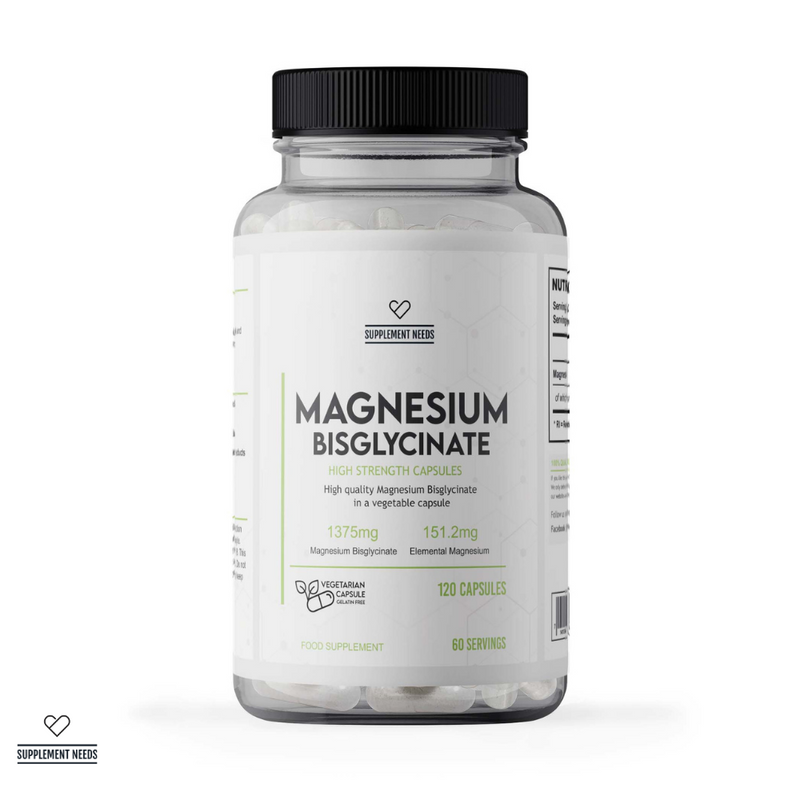
If you’ve decided to try Magnesium for sleep, Supplement Needs Magnesium Bisglycinate closely reflects the current evidence. It provides 151.2mg of elemental Magnesium per two-capsule serving from 1,375mg of Magnesium Bisglycinate - one of the few Magnesium forms with direct sleep-specific clinical research behind it.
As well as providing a transparent elemental Magnesium dose, Magnesium Bisglycinate is widely regarded as one of the gentlest forms on the digestive system, making it well suited to daily use. Whilst no Magnesium supplement can guarantee better sleep, choosing a high-quality Bisglycinate supplement gives you a product that aligns closely with the current evidence and is easy to incorporate into a consistent bedtime routine.
When should you consider Sleep Stack instead?

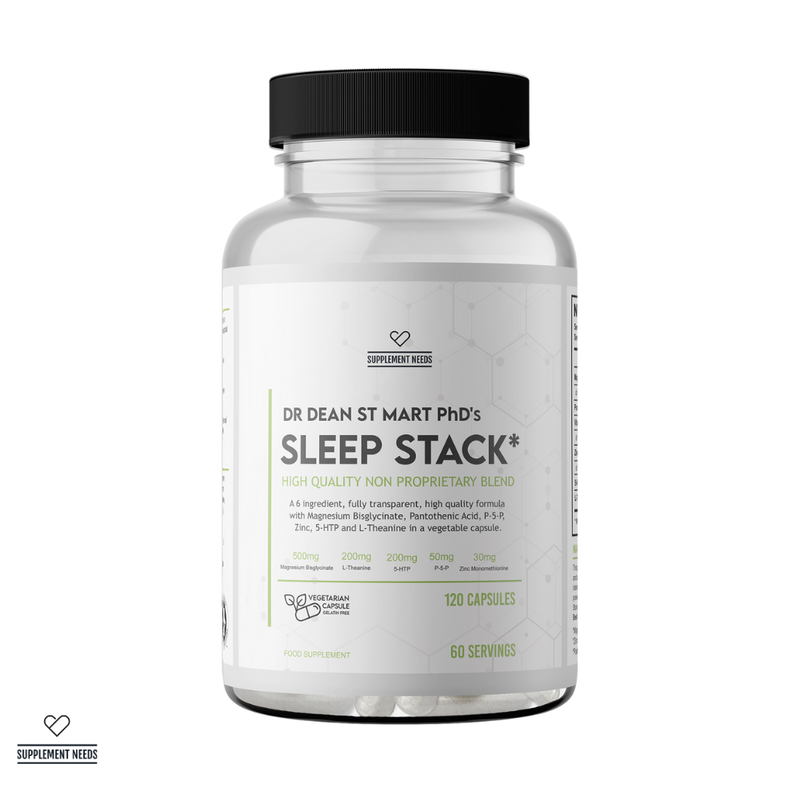
If you find that Magnesium alone isn’t giving you the results you’re looking for, Sleep Stack offers a more comprehensive approach.
Alongside Magnesium Bisglycinate, it contains ingredients such as L-Theanine, 5-HTP, Vitamin B6, and Zinc - each chosen to support different aspects of the body’s natural sleep pathways. For example, L-Theanine has been shown to promote relaxation and improve subjective sleep quality in several clinical studies and systematic reviews, whilst 5-HTP acts as a precursor to serotonin and melatonin, two compounds involved in regulating the sleep-wake cycle.
Rather than acting as a sedative, Sleep Stack is designed to support multiple aspects of healthy sleep physiology in a single formula. If you’re looking for broader sleep support than Magnesium can provide, it offers a convenient way to combine several well-researched ingredients in one daily serving.
However, because it contains 5-HTP, it should not be taken alongside SSRIs, SNRIs, MAOIs, or other medicines that increase serotonin levels without first speaking to your doctor, due to the risk of serotonin syndrome.
Ready to improve your sleep?
If you’re looking for a simple, high-quality Magnesium supplement, Supplement Needs Magnesium Bisglycinate closely reflects the current research and is ideal for daily use. Or, if you want broader nutritional support for relaxation and sleep, Sleep Stack combines Magnesium Bisglycinate with several complementary ingredients in one convenient formula.
Shop sleep support at Supplement Needs now
For more insights and information about supplements, discover the Supplement Needs blog…
How to Improve Your Cardiovascular Health: The Ultimate Guide to Heart Health Supplements | Why Low Iron Isn’t the Reason for Your Fatigue: A Deep Dive Into Vitamin B Deficiencies | The Myth of ‘Clean Supplements’: Learning About Excipients, Fillers & Agents
Disclaimer:
The information contained on this website should not be used as a substitute for medical care or advice. If you have questions about your health, please contact your doctor.