






Although approximately half of all pregnancies occur ‘accidentally’, for many women their conception journey can be complex and frustrating.
However, as numerous studies have shown, women can improve their chances of becoming pregnant by ensuring they are consuming the recommended daily allowance of key vitamins and minerals.
Whilst the NHS recommends women take two specific supplements when attempting to get pregnant - Folic acid (Vitamin B9) and Vitamin D - it is essential that you aren’t deficient in any of the other essential vitamins your body requires.
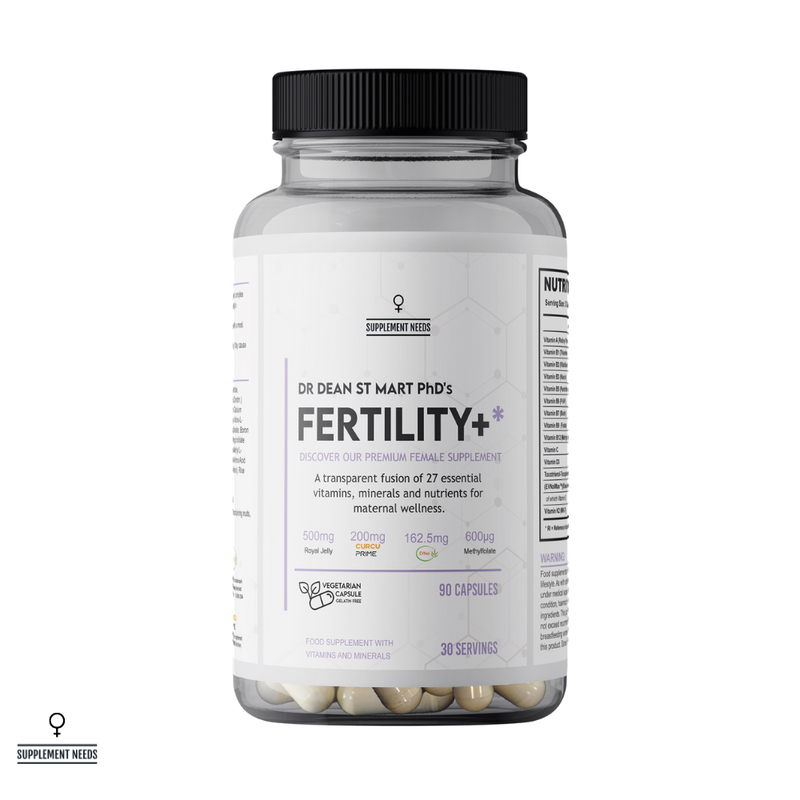
That’s why Supplement Needs has created Fertility+. This is a transparently dosed, high-quality blend of 27 essential vitamins, minerals and nutrients that have been designed to complement maternal wellness.
What are fertility supplements?
Fertility supplements - as the name suggests - are supplements that are designed to provide your body with the essential vitamins your body requires to support egg health.
As a minimum, fertility supplements should include efficacious doses of the vitamins Vitamin D, Vitamin B9, and Vitamin C (although it is good to look for other B complex vitamins within the supplement, too).
Minerals to look for in fertility supplements include Magnesium and Zinc.
How can you boost your fertility?
Aside from consuming a healthy diet and ensuring your body is receiving the recommended daily intake of essential vitamins, there are a number of other things you can do to boost your chances of conception. These include:
- Ceasing smoking.
- Stopping drinking alcohol.
- Maintaining a healthy weight.
- Monitoring your ovulation.
- Reducing stress.
- Having regular sex throughout your cycle.
- Exercise (within reason).
- Staying hydrated.
If you do have concerns about your fertility, please speak to your GP.
What to look for in a fertility supplement
As you’ll soon discover when you begin searching for fertility supplements, there are hundreds to choose from.
So, we don’t blame you for not knowing where to start!
If you want to ensure you select the very best fertility supplement for your conception journey, then look for the following things:
- Transparently dosed - this is arguably the most important thing to look for. Any fertility supplement you choose should be completely transparent about the ingredients it contains. If not, you can never be entirely sure it contains what it claims to.
- Good Manufacturing Practice - any supplement you buy should have been made in line with Good Manufacturing Practice (GMP) standards. This will ensure you’re buying a safe and efficacious product.
- Credentials - who is behind the supplement you are buying? Any fertility supplement you purchase should have been developed by a properly experienced and credentialed expert.
Here at Supplement Needs all of our supplements are designed, formulated and manufactured in line with the above points. Our product formulator is Dr. Dean St Mart PhD - who holds a double first honours degree in chemistry and pharmaceutical chemistry, as well as a PhD in synthetic organic chemistry and fluorescence spectroscopy.
Where can I find more information on fertility supplements?
Supplement Needs has created an in-depth guide on What You Should Look for in Pregnancy Supplements. Read it now to find out more.
FAQs
Which Supplement Needs product is fertility focused?
Female Fertility+ is the dedicated formula. It contains 27 listed ingredients and provides zinc, which contributes to normal fertility and reproduction.
Does Fertility+ guarantee conception?
No. A food supplement does not guarantee pregnancy or increased conception rates.
Is Fertility+ a prenatal vitamin?
Always discuss any supplementation plans with your general health care practitioner.
What does the NHS recommend when trying for a baby?
Current NHS guidance recommends 400 micrograms of folic acid daily when trying to conceive, ideally beginning around three months beforehand, and continuing through the first 12 weeks of pregnancy.
Can Fertility+ be used during fertility treatment?
That should be discussed with the treating clinician because supplements can interact with medication or duplicate nutrients within another protocol.